
Introduction: Why Are Most Coir Production Lines “Underfed”?
A common problem in the coir processing industry: production lines are fully equipped, but actual output falls far short of designed capacity. The reason is often not in the dryer or baler, but in the front-end processes—peeling and chopping.
In traditional production lines, low-efficiency peeling machines and uneven chopping lead to two problems:
- “Waiting for materials”: Peeling speed lags behind, leaving downstream equipment idle.
- “Inconsistent quality”: Uneven chopping forces the desalting and drying stages to accommodate the slowest parts, dragging down overall line efficiency.
The result: significant equipment investment, but high unit production costs.
Peeling Machine: From “Bottleneck” to “Engine”
Pain Points of Traditional Peeling Machines
Common coconut fiber peeling machines on the market typically process between 200 and 500 pieces per hour. This means:
- To feed a medium-scale coir production line, you need 2–3 peeling machines running in parallel
- Each machine requires 1–2 operators
- Multiple machines in parallel complicate feeding conveyors and increase potential failure points
The Solution: High-Efficiency Peeling Machine
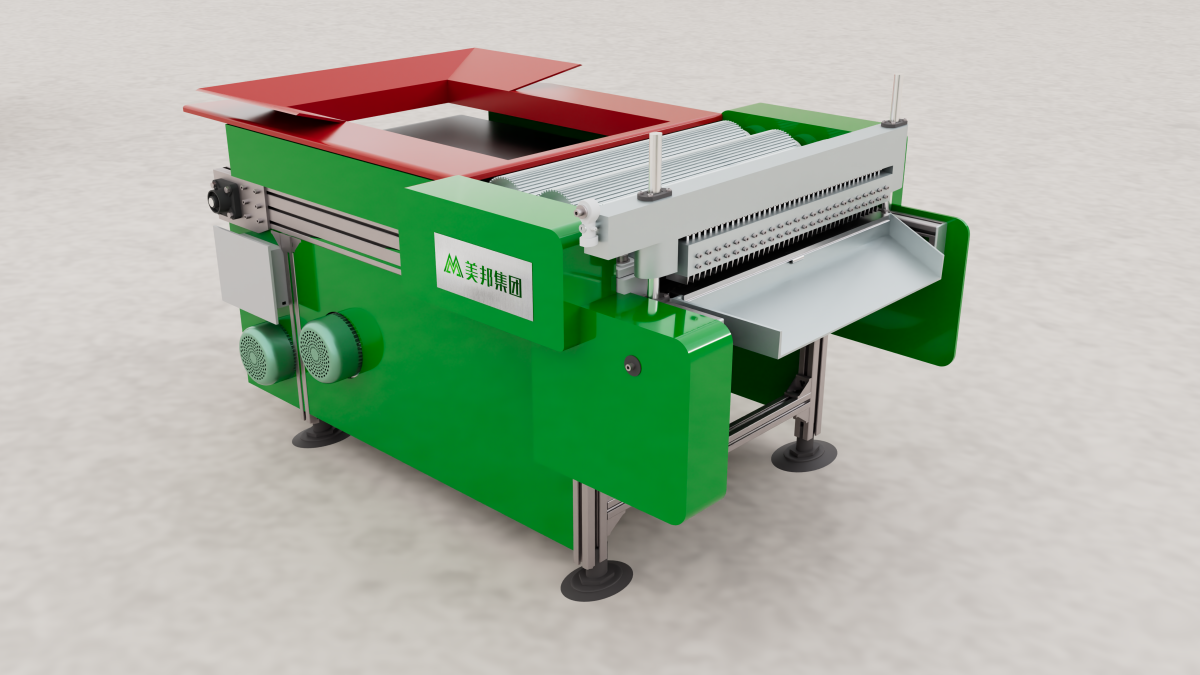
Our self-developed high-efficiency coconut fiber peeling machine processes up to 1,200 pieces per hour—equivalent to 2–4 traditional machines.
| Comparison | Traditional Machine | High-Efficiency Machine |
|---|---|---|
| Output per hour | 200–500 pieces | 1,200 pieces |
| Operators | 2–3 per machine | 1 per machine |
| Parallel units needed | 2–3 units | 1 unit sufficient |
Actual Benefits:
- 40%+ savings on equipment investment: One machine replaces multiple units
- 60% reduction in labor costs: Single operator, no need for multiple machine operators
- 50% less floor space: Compact footprint, no need for multiple feeding lines
- Doubled line capacity: Peeling is no longer the bottleneck; downstream equipment runs at full capacity
Chopping Machine: Uniformity Determines Final Quality
If the peeling machine solves the “quantity” problem, the chopping machine solves the “quality” problem.
Why Is Uniform Chopping So Important?
The downstream processes—desalting, dewatering, drying—all depend on uniformity:
- Desalting: Uneven pieces mean small pieces desalt quickly while large pieces lag behind. To ensure large pieces meet standards, processing time must be extended, leading to over-desalting of small pieces and compromising fiber quality
- Drying: The same issue—uneven pieces make drying time difficult to control. Either large pieces remain wet (leading to mold later) or small pieces become over-dried (fibers become brittle, increasing loss)
- Final quality: Coir products require uniform particle size to ensure consistent water retention and aeration. Inconsistent raw materials cannot produce high-quality coir
Advantages of a High-Efficiency Chopping Machine
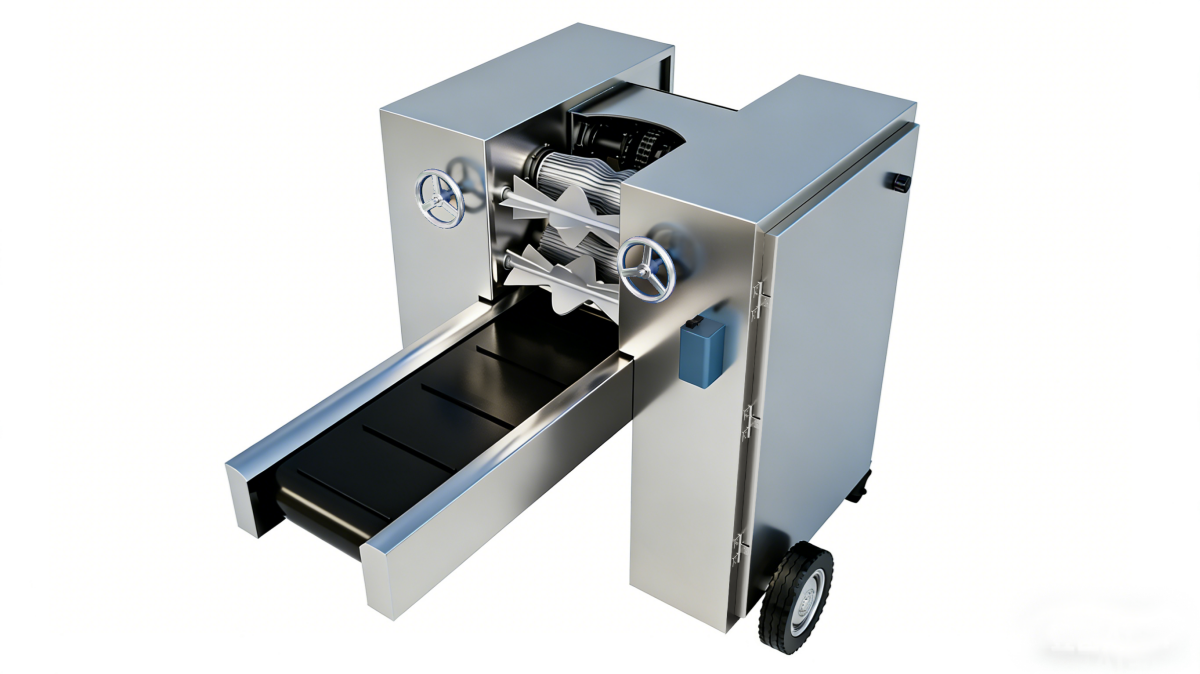
Our chopping machine delivers 800–1,000 jin per hour (approximately 400–500 kg/h) with uniformity that exceeds industry standards.
| Comparison | Traditional Chopper | High-Efficiency Chopper |
|---|---|---|
| Output per hour | 500–800 jin | 800–1,000 jin |
| Uniformity | Inconsistent | Highly uniform |
| Downstream efficiency | Compromised by slowest pieces | Consistent line rhythm |
Actual Benefits:
- 15–20% water savings in desalting: Uniform pieces allow consistent processing time, eliminating excessive washing
- 20–30% energy savings in drying: Precise drying time control eliminates over-drying
- 5–8% yield improvement: Reduced loss from over-chopping and over-drying
- Higher product quality: Uniform coir commands higher prices and meets stringent export standards for European and North American markets
1+1 > 2: The Synergy of Peeling + Chopping
When both the peeling machine and chopping machine achieve high efficiency, the overall production line benefits multiply rather than simply add:
| Process | Traditional Model | High-Efficiency Model |
|---|---|---|
| Peeling | 2 units in parallel, 4 operators, 800 pcs/h | 1 unit, 1 operator, 1,200 pcs/h |
| Chopping | 1 unit, 600 jin/h, uneven | 1 unit, 900 jin/h, uniform |
| Line Status | Peeling lags behind, chopping uneven | Full capacity, stable quality |
Overall Line Benefits:
- 50–100% increase in line capacity
- 40–60% reduction in labor cost per unit
- 15–25% reduction in energy consumption per unit
- 10%+ improvement in product yield
Conclusion: From “Having Equipment” to “Achieving Profitability”
Many coir processing plants face the same challenge: equipment is installed, the line is built, but profitability remains elusive. The root cause is often front-end process efficiency and quality holding back the entire line.
High-efficiency peeling + high-efficiency chopping is not just equipment upgrade—it’s a fundamental shift in production logic: transforming a line that is “underfed and struggling” into one that runs “at full capacity with maximum efficiency.”
When peeling and chopping are no longer bottlenecks, the true value of the entire coir production line is finally realized.
(In the next article, we will systematically analyze the investment return and economic benefits of a complete coir production line.)