

High-Fiber Material Dewatering Solutions for Coconut Coir, Cassava Pulp & Biomass Waste
High-Fiber Material Dewatering Solutions for Coconut Coir, Cassava Pulp & Biomass Waste
Industries processing organic waste, biomass residue, and agricultural byproducts often face serious challenges when handling high-moisture and long-fiber materials. Materials such as coconut coir, cassava pulp, cow manure, sugarcane bagasse, brewery spent grain, palm fiber, and paper pulp residue are extremely difficult to dewater using conventional sludge treatment equipment.
Efficient high-fiber material dewatering has become increasingly important for reducing transportation costs, improving biomass recycling efficiency, minimizing waste volume, and meeting environmental regulations. Choosing the right industrial dewatering equipment is critical for achieving stable continuous operation and lower final moisture content.
Our industrial belt filter press systems are specially designed for high-fiber and high-moisture materials, providing reliable continuous dewatering performance for a wide range of organic and biomass applications.
Why High-Fiber Materials Are Difficult to Dewater
Compared with ordinary sludge, fibrous organic materials contain long fibers, lightweight structures, and strong water retention capacity. Water becomes trapped inside the fiber network, making mechanical separation much more difficult.
Traditional filter presses or screw presses often encounter problems such as:
- Fiber entanglement
- Material blockage
- Poor drainage efficiency
- Sticky cake formation
- High maintenance requirements
- Unstable continuous operation
- Excessive wear on components
Materials like coconut coir and cassava pulp may contain moisture levels above 80%, significantly increasing transportation costs and reducing downstream processing efficiency.
Without proper high-fiber material dewatering systems, factories often experience:
- Higher drying energy consumption
- Increased waste disposal costs
- Difficult storage conditions
- Environmental odor problems
- Reduced biomass recycling value
For this reason, many industries are replacing traditional dewatering equipment with continuous belt filter press dewatering systems designed specifically for fibrous materials.
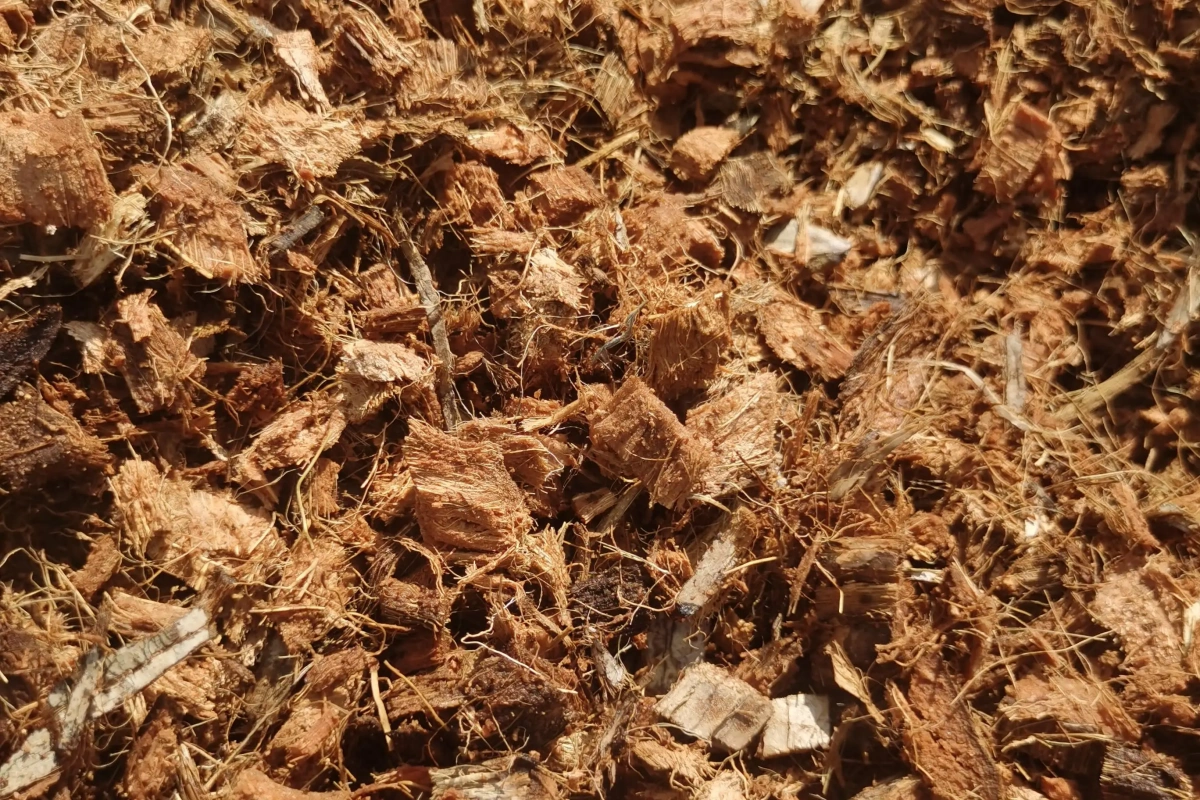
Challenges in Coconut Coir Dewatering
Coconut coir is widely used in horticulture, growing media production, and biomass recycling. However, raw coconut coir contains large amounts of water and long elastic fibers that make dewatering extremely challenging.
Conventional dewatering machines frequently suffer from:
- Fiber wrapping
- Low water removal efficiency
- Frequent clogging
- Inconsistent discharge
- High maintenance downtime
Efficient coconut coir dewatering is essential for reducing transportation weight and improving drying efficiency in cocopeat production lines.
Belt Filter Press for Coconut Coir
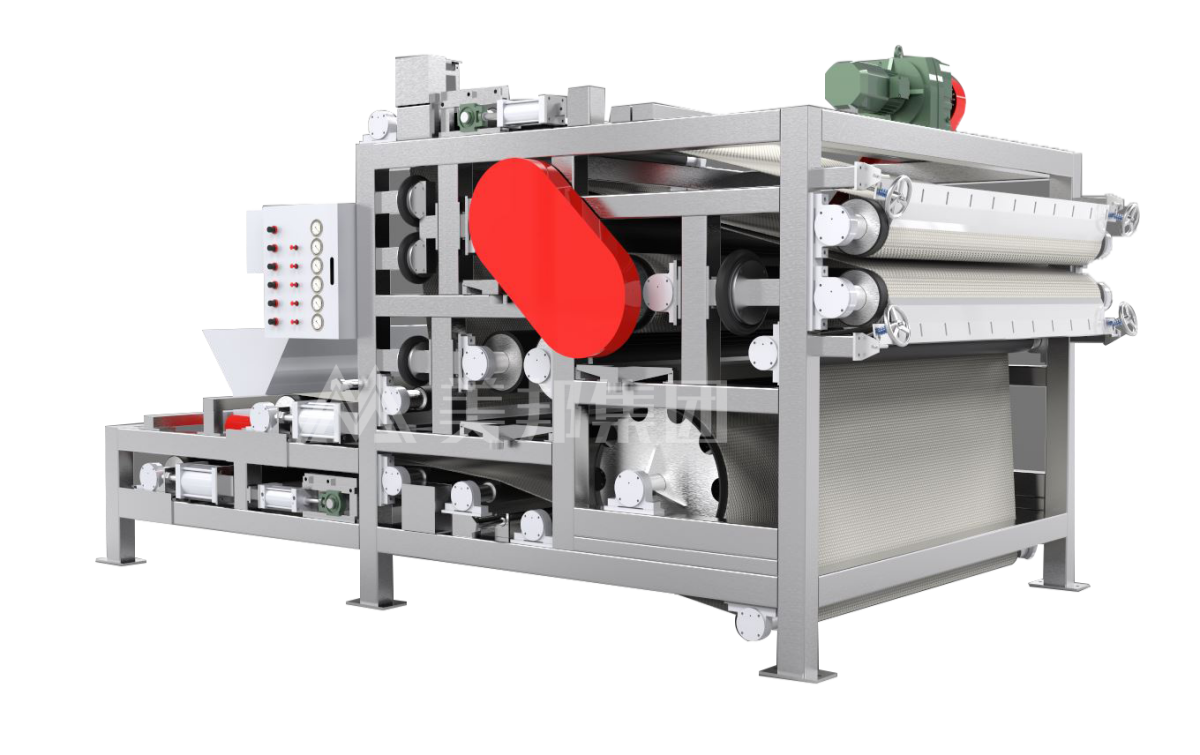
A continuous belt filter press is highly suitable for coconut coir processing because it combines gravity drainage with progressive pressure dewatering.
The material first enters a gravity drainage zone where free water is removed naturally. It then passes through multiple pressure rollers that gradually compress the material, improving water separation while preventing sudden surface sealing.
Benefits of using a belt filter press for coconut coir include:
- Continuous operation
- Large processing capacity
- Reduced labor requirements
- Lower moisture content
- Stable discharge performance
- Reduced transportation costs
- Lower drying energy consumption
For large-scale cocopeat factories, industrial belt presses provide reliable long-term operation with minimal manual intervention.
Cassava Pulp Dewatering Solution
Cassava pulp is generated during starch extraction and food processing operations. Fresh cassava residue contains fine fibers, starch particles, and extremely high moisture content.
Without efficient cassava pulp dewatering, the material quickly ferments and creates environmental and storage problems. Wet cassava pulp is also expensive to transport and difficult to reuse as animal feed or biomass fuel.
Traditional screw presses often struggle because cassava pulp forms sticky layers that reduce filtration efficiency.
Continuous Dewatering for Cassava Residue
Industrial belt filter press systems provide gradual compression and continuous filtration, making them highly effective for cassava pulp processing.
Advantages include:
- Stable continuous operation
- Better handling of sticky fibrous material
- Large filtration area
- Reduced moisture content
- Lower operational costs
- Improved material handling efficiency
After dewatering, cassava pulp becomes easier to transport, dry, pelletize, or process into animal feed products.
Biomass Dewatering Solutions
Many industries require efficient biomass dewatering equipment for processing organic waste and agricultural residues.
Typical applications include:
- Sugarcane bagasse dewatering
- Brewery spent grain dewatering
- Palm fiber dewatering
- Paper pulp residue dewatering
- Agricultural waste dewatering
- Organic sludge dewatering
- Biomass sludge dewatering
- Cow manure dewatering
These materials often contain long fibers and high moisture levels that are difficult for conventional sludge equipment to process efficiently.
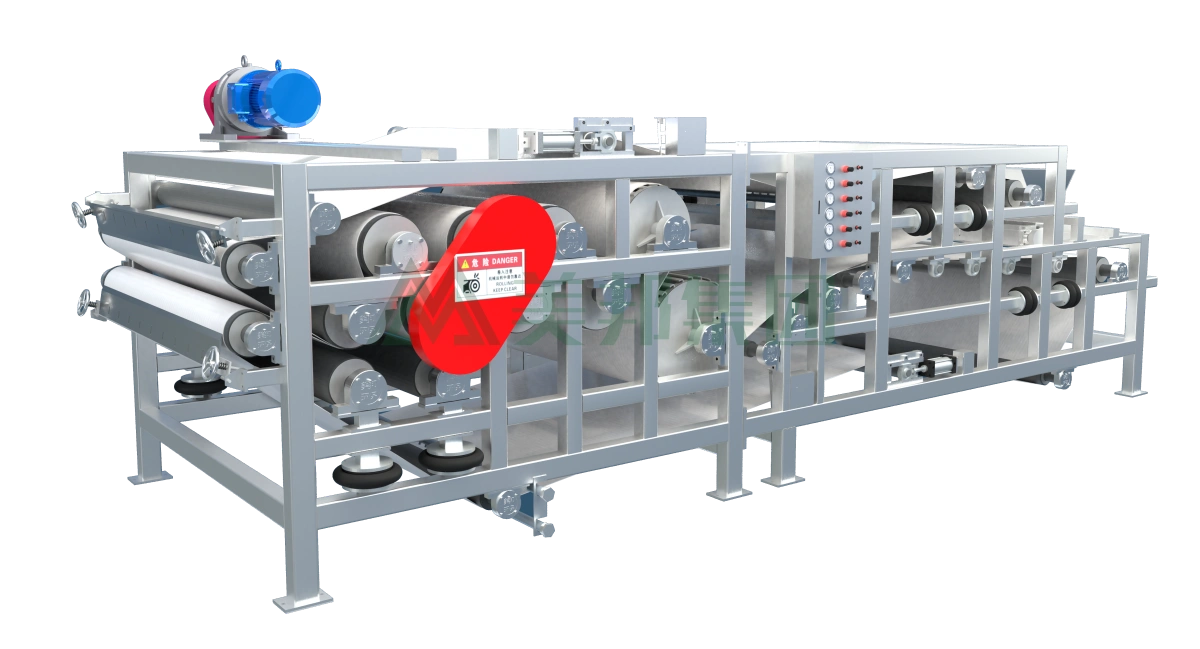
A heavy-duty belt filter press dewatering system provides stable operation for continuous industrial biomass processing.
Cow Manure Dewatering Solution
Livestock farms generate large volumes of high-moisture manure that require effective solid-liquid separation.
Efficient cow manure dewatering can help:
- Reduce storage volume
- Lower transportation costs
- Improve composting efficiency
- Reduce wastewater generation
- Produce reusable organic fertilizer materials
Compared with traditional methods, continuous belt presses offer better automation and lower labor requirements for large-scale manure treatment operations.
Advantages of Belt Filter Press Systems for Fibrous Materials
Compared with plate filter presses and screw presses, industrial belt filter press machines offer several advantages for fibrous biomass applications.
Continuous Industrial Operation
Continuous feeding and discharge improve processing efficiency for large-scale production lines.
Better Fiber Handling Capability
The open belt structure reduces the risk of fiber entanglement and clogging.
Large Processing Capacity
Heavy-duty belt presses can process high volumes of organic waste and biomass residue.
Lower Energy Consumption
Continuous belt dewatering systems often require less energy than thermal drying or high-pressure filtration systems.
Reduced Maintenance Costs
Simple mechanical structure and stable operation help reduce downtime and maintenance frequency.
Lower Final Moisture Content
Progressive compression improves water removal efficiency for difficult high-fiber materials.
Customized High-Fiber Material Dewatering Systems
Different materials require different dewatering solutions depending on:
- Fiber length
- Material viscosity
- Particle size
- Initial moisture content
- Desired final moisture level
- Processing capacity
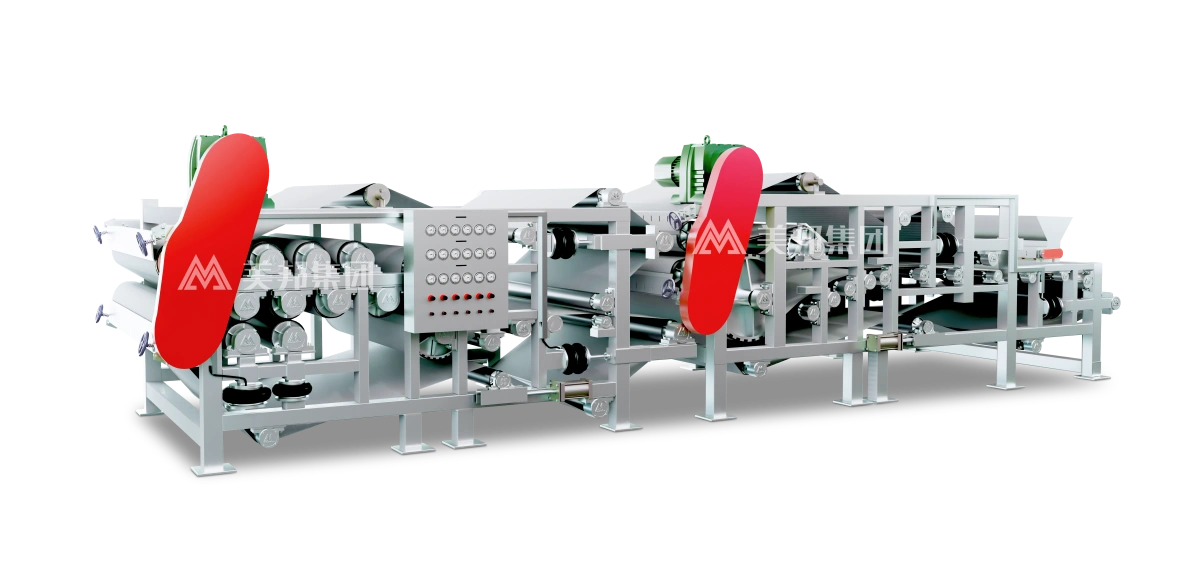
Our industrial dewatering systems can be customized for various high-fiber material dewatering applications, including coconut coir processing plants, cassava starch factories, biomass recycling facilities, and organic waste treatment projects.
Integrated systems may include:
- Conveyors
- Shredders
- Polymer dosing systems
- Wastewater treatment systems
- Automatic control systems
- Drying equipment
Industrial Belt Filter Press Manufacturer for High-Fiber Materials
As an experienced industrial dewatering equipment manufacturer, we specialize in providing reliable belt filter press solutions for difficult fibrous materials.
Our systems are widely used for:
- Coconut coir dewatering
- Cassava pulp dewatering
- Biomass sludge dewatering
- Organic waste dewatering
- Agricultural residue dewatering
- Manure dewatering
- High-fiber biomass processing
With continuous operation, large treatment capacity, and strong adaptability to fibrous materials, industrial belt filter press systems provide an efficient and cost-effective solution for modern biomass and organic waste processing industries.
If you are looking for a reliable high-fiber material dewatering solution, our belt press systems can help improve production efficiency, reduce operational costs, and optimize biomass recycling performance.