
Introduction
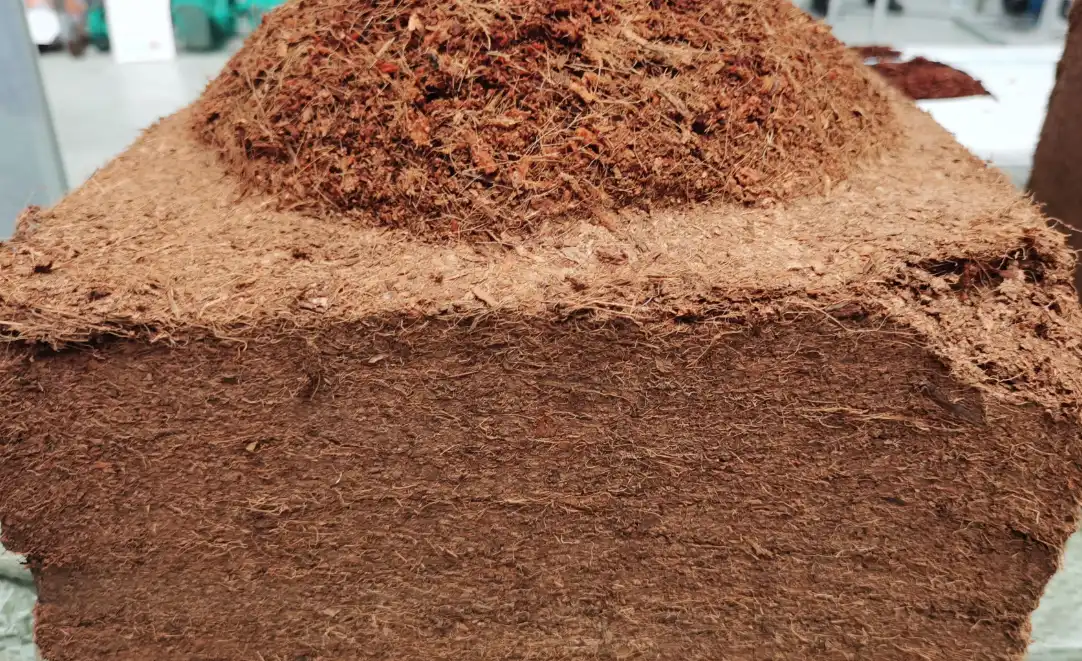
Coco peat is widely used in horticulture, greenhouse cultivation, and hydroponic farming due to its excellent water retention and aeration properties. However, freshly processed coco peat usually contains a high moisture content, which makes it unsuitable for packaging, storage, or export.
To improve product quality and transportation efficiency, coco peat must be properly dried before compression into blocks or bricks. Therefore, selecting the right coco peat drying method and drying equipment is a critical step in building an efficient coco peat processing plant.
This article explains the common coco peat drying methods, the advantages of different drying technologies, and the equipment typically used in a modern coco peat production line.
Why Coco Peat Drying Is Important
During the washing and desalting stages of coco peat processing, the material absorbs a large amount of water. The moisture content of freshly washed coco peat can reach 60% to 80%.
If coco peat is not dried properly, it may lead to several problems:
- Difficult compression into coco peat blocks
- Increased transportation costs
- Risk of mold during storage
- Reduced product quality
For most export markets, the ideal moisture content of coco peat is usually around 15% to 20% before compression.
Proper drying ensures stable product quality and improves the efficiency of the entire coco peat processing line.
Common Coco Peat Drying Methods
There are two main methods used in the coco peat industry: natural sun drying and mechanical drying.
Natural Sun Drying
Sun drying is the traditional method used by many small and medium coco peat producers.
In this process, washed coco peat is spread evenly on open drying yards and exposed to sunlight for several hours or days.
Advantages of sun drying:
- Very low operating cost
- Simple process
- No special equipment required
However, this method also has several limitations:
- Strongly dependent on weather conditions
- Large land area required
- Slow drying speed
- Inconsistent moisture levels
Because of these limitations, many modern coco peat factories are gradually adopting mechanical drying systems.
Mechanical Drying
Mechanical drying uses specialized coco peat drying equipment to remove moisture quickly and efficiently.
Compared with sun drying, mechanical drying offers several advantages:
- Stable production capacity
- Faster drying speed
- Less land requirement
- More consistent product quality
Mechanical dryers are especially suitable for large-scale coco peat processing plants that export coco peat products internationally.
Types of Coco Peat Drying Equipment
Different types of dryers can be used in coco peat production lines depending on the factory size and production capacity.
Rotary Dryer
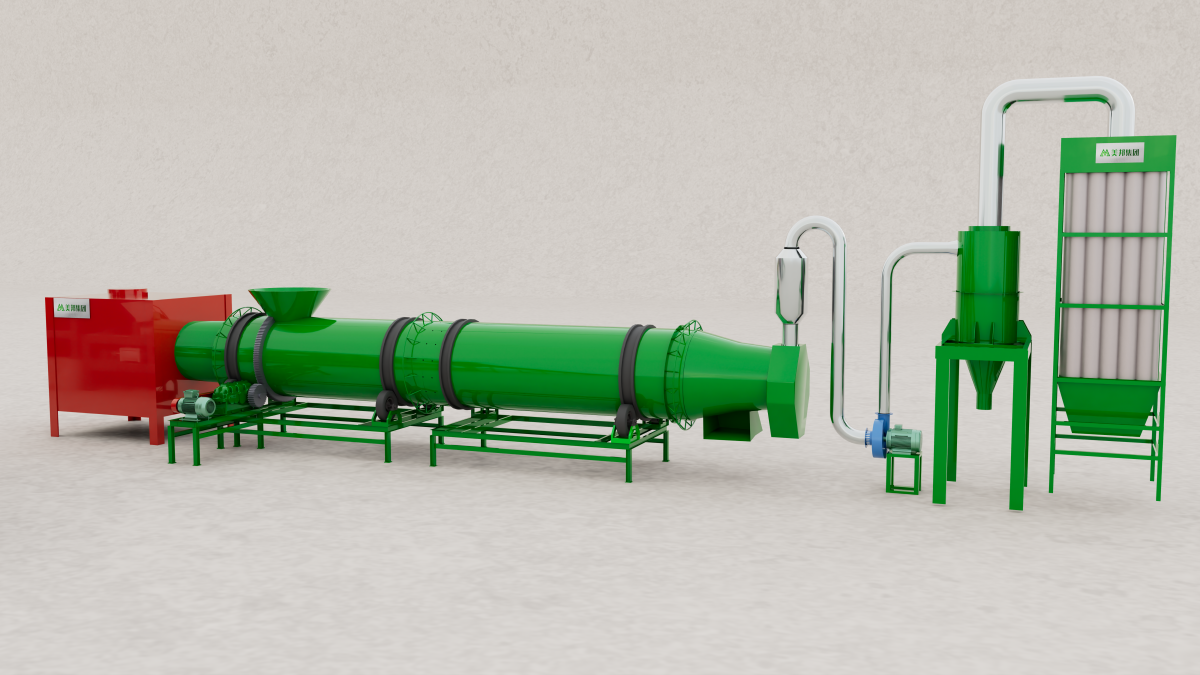
The rotary dryer is one of the most commonly used machines for coco peat drying.
In this system, coco peat is fed into a rotating drum where hot air flows through the material to remove moisture.
Advantages of rotary dryers include:
- Large processing capacity
- Continuous operation
- Stable drying performance
Rotary dryers are widely used in medium and large coco peat factories.
Belt Dryer
Belt dryers are another efficient drying solution used in modern coco peat processing plants.
In this system, coco peat moves slowly through multiple drying zones on a conveyor belt while hot air circulates around the material.
Advantages include:
- Uniform drying
- Better temperature control
- Suitable for high-quality coco peat production
Belt dryers are often used when precise moisture control is required.
Flash Dryer
Flash dryers are designed for rapid moisture removal from fine materials such as coco peat powder.
The material is suspended in a stream of hot air, allowing extremely fast drying.
Flash dryers offer:
- High drying efficiency
- Compact equipment design
- Fast moisture reduction
However, this type of dryer is usually used in specialized processing systems.
Choosing the Right Coco Peat Drying Equipment
Selecting the right dryer for a coco peat processing plant depends on several factors.
Production Capacity
Large-scale production lines typically require high-capacity rotary or belt dryers.
Available Land Area
Factories with limited space often prefer mechanical dryers instead of large sun drying yards.
Energy Consumption
Energy efficiency is an important factor in long-term operating costs.
Raw Material Moisture Content
If coco peat has very high moisture levels after washing, a coco peat dewatering machine is often used before the drying stage to reduce energy consumption.
A well-designed combination of dewatering equipment and drying systems significantly improves production efficiency.
Integration in a Coco Peat Production Line
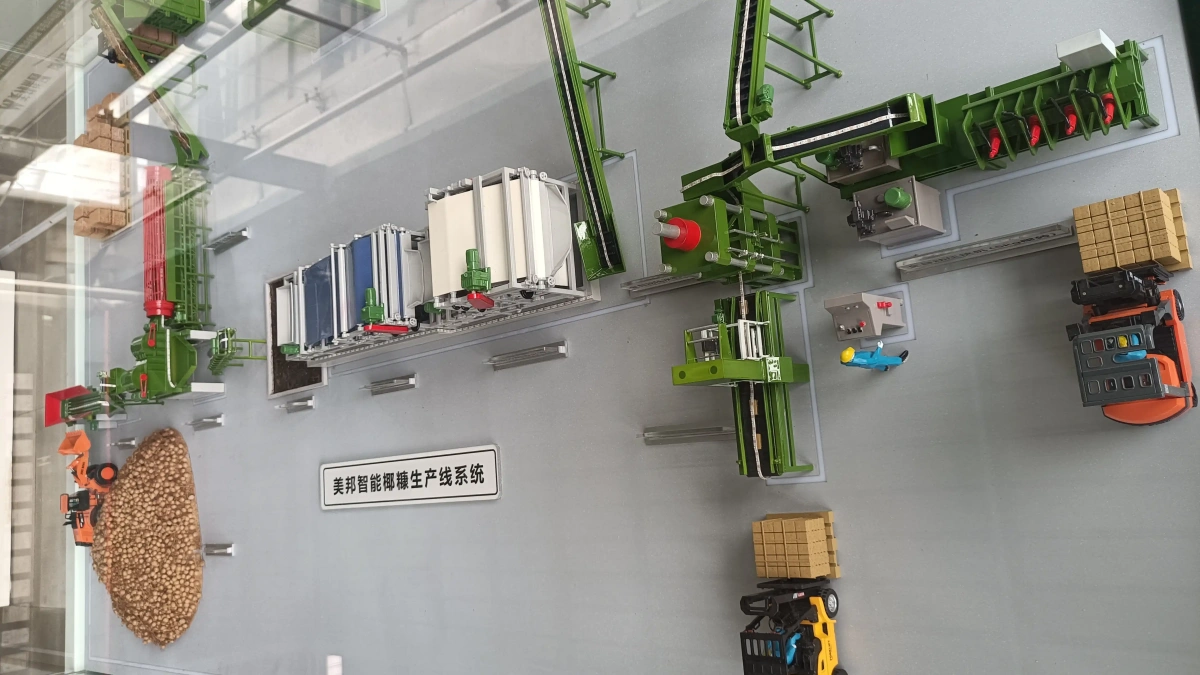
In a modern coco peat processing plant, drying equipment is usually integrated into a complete production line.
A typical coco peat production line includes:
- Coconut husk crushing machine
- Fiber separation system
- Washing and desalting system
- Coco peat dewatering machine
- Coco peat drying equipment
- Screening system
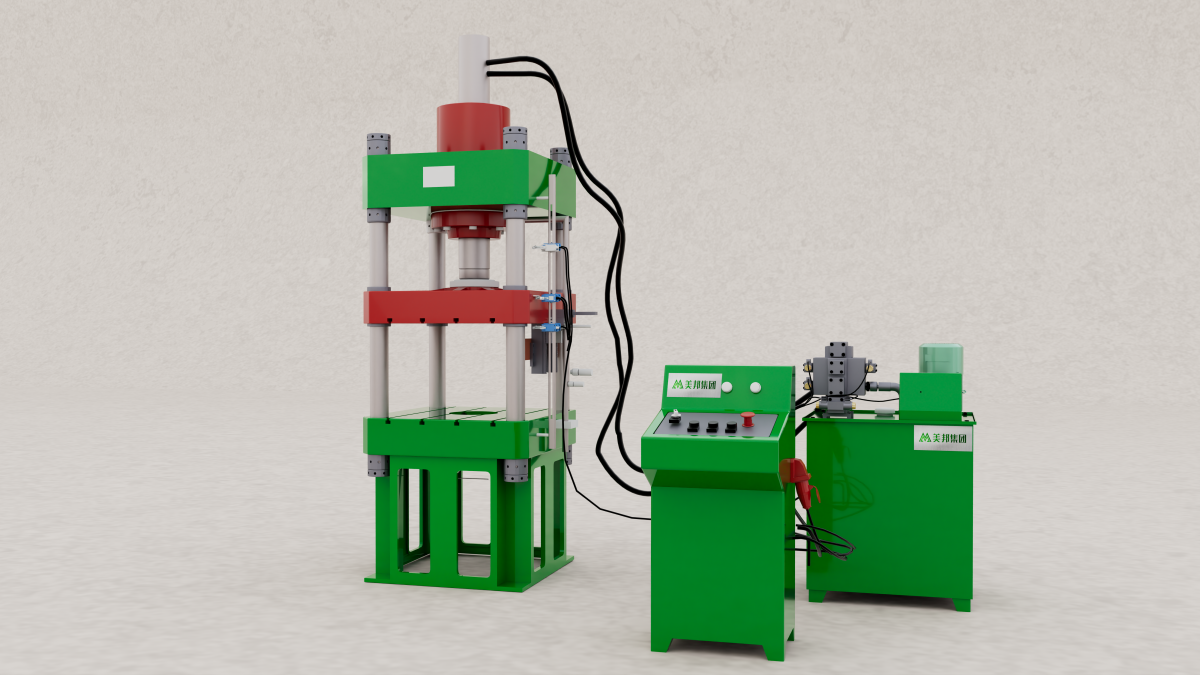
- Coco peat block making machine
This integrated process ensures stable production and consistent product quality.
Benefits of Efficient Coco Peat Drying Systems
Installing proper coco peat drying equipment provides several important benefits.
Improved production efficiency
Mechanical drying significantly reduces processing time.
Stable moisture control
Uniform drying ensures consistent block compression and expansion.
Reduced storage risks
Lower moisture levels prevent mold and product damage.
Better export competitiveness
High-quality dried coco peat meets international horticultural standards.
Conclusion
Coco peat drying is a critical stage in the coco peat processing process. Proper moisture control ensures product quality, improves transportation efficiency, and supports stable production.
While traditional sun drying is still used in small-scale operations, modern coco peat factories increasingly rely on mechanical drying equipment such as rotary dryers and belt dryers to achieve higher efficiency and consistent product quality.
A well-designed drying system, combined with other key machines in the coco peat production line, helps manufacturers meet the growing global demand for coco peat products.
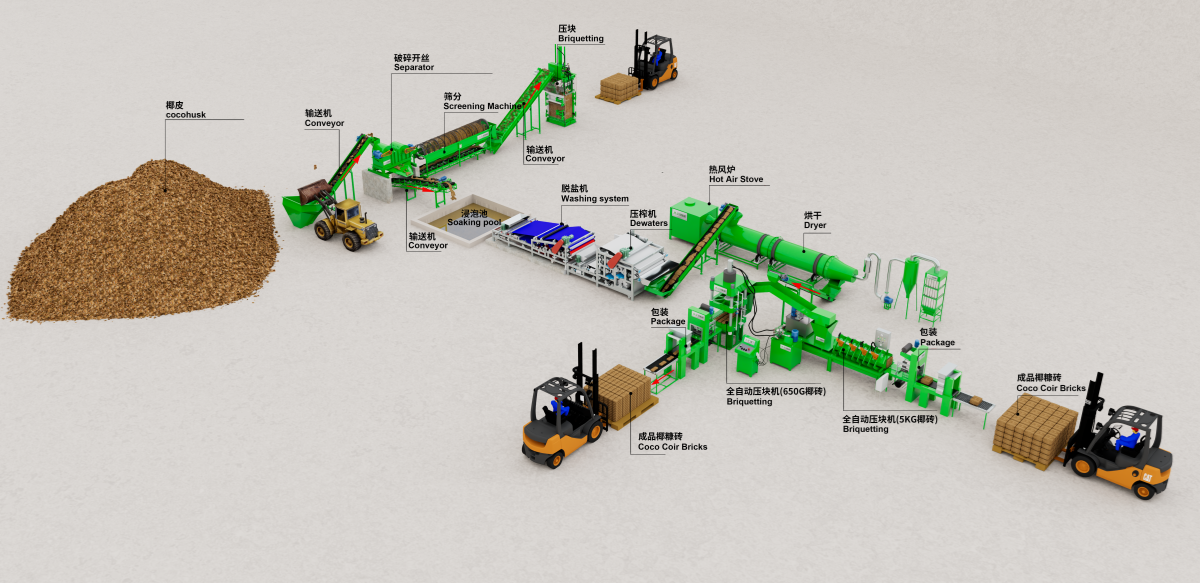
Coco Peat Processing Equipment Solutions
For manufacturers planning to build or upgrade a coco peat processing plant, choosing the right drying system is essential.
Professional equipment solutions typically include:
- Coconut husk crushers
- Coco peat washing systems
- Coco peat dewatering machines
- Coco peat dryers
- Coco peat block making machines
Customized production line designs can help maximize efficiency and reduce operating costs.