
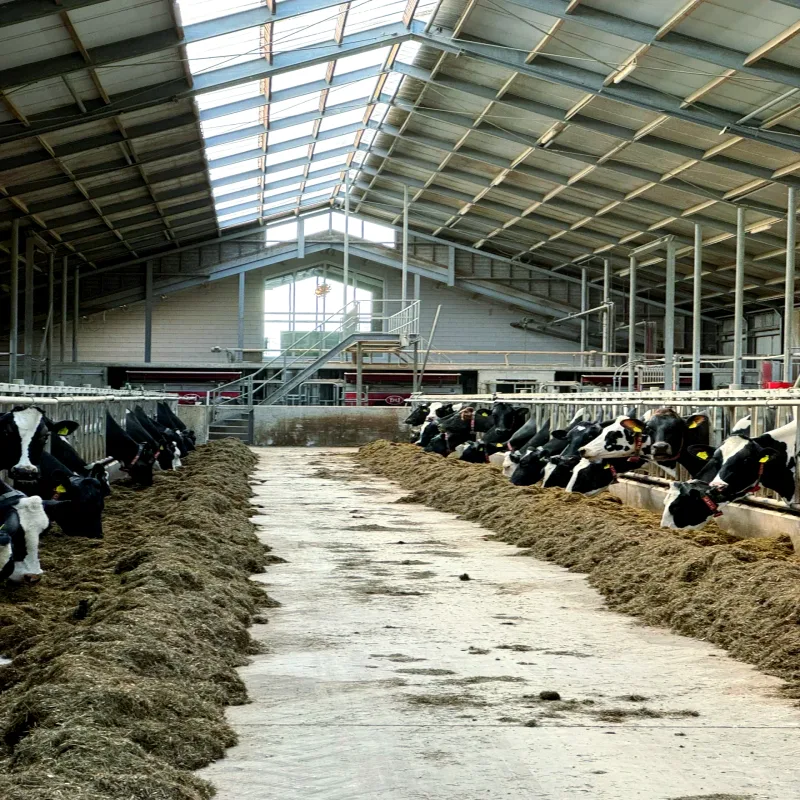

1. Turning Dairy Manure into a Valuable Resource
Large dairy farms across Europe face a growing challenge: how to manage increasing volumes of manure while controlling operating costs and making better use of farm resources.
Traditionally, cattle manure has been collected, stored, transported, and applied to agricultural land. However, modern dairy farms are increasingly exploring resource recovery options that can reduce waste handling costs and improve the efficiency of manure management.
One approach is recycled manure solids (RMS), a bedding material produced by separating the solid and liquid fractions of dairy manure slurry. The recovered solids can be reused in cow cubicles as an alternative to conventional bedding materials, subject to appropriate management and hygiene requirements.
The EU-funded Resilience for Dairy project has documented the use of mechanically separated manure solids as cow bedding. Potential benefits include reduced bedding costs, improved resource efficiency, and lower dependence on purchased bedding materials. EU CAP Network
For large dairy farms, the first step toward this circular approach is efficient solid-liquid separation. A high-capacity, automated dewatering system can help farms process large manure volumes, recover useful solids, and reduce the workload associated with daily manure handling.
2. Why Solid-Liquid Separation Matters
Dairy manure slurry contains water, organic matter, undigested plant fibers, and nutrients. Its composition varies according to feeding practices, barn cleaning systems, bedding materials, and the amount of wash water entering the collection system.
Without separation, the entire slurry volume may need to be stored, pumped, transported, or treated as a single material stream. This can increase the demand for storage capacity and pumping operations.
Mechanical solid-liquid separation divides the slurry into two streams:
- Solid fraction: Contains recoverable organic matter and fibers that may be suitable for further processing into recycled manure solids.
- Liquid fraction: Can be directed to appropriate storage, nutrient management, wastewater treatment, or other farm-specific treatment processes.
Separating these streams allows farms to manage them according to their different characteristics and intended uses.
Research published in the Journal of Dairy Science compared mechanical manure separation technologies, including screw presses, roller presses, and decanter centrifuges. The study found that equipment capacity, acquisition cost, energy consumption, solids content, and the physical structure of the recovered material are important factors when selecting a separator.
The findings also demonstrate that no single separator is automatically the best choice for every farm. The right system must match the farm’s throughput requirements and the intended use of the recovered solids.
Source: Production of Recycled Manure Solids for Bedding in Canadian Dairy Farms: Solid-Liquid Separation.
3. The Challenges of Manure Processing on Large Dairy Farms
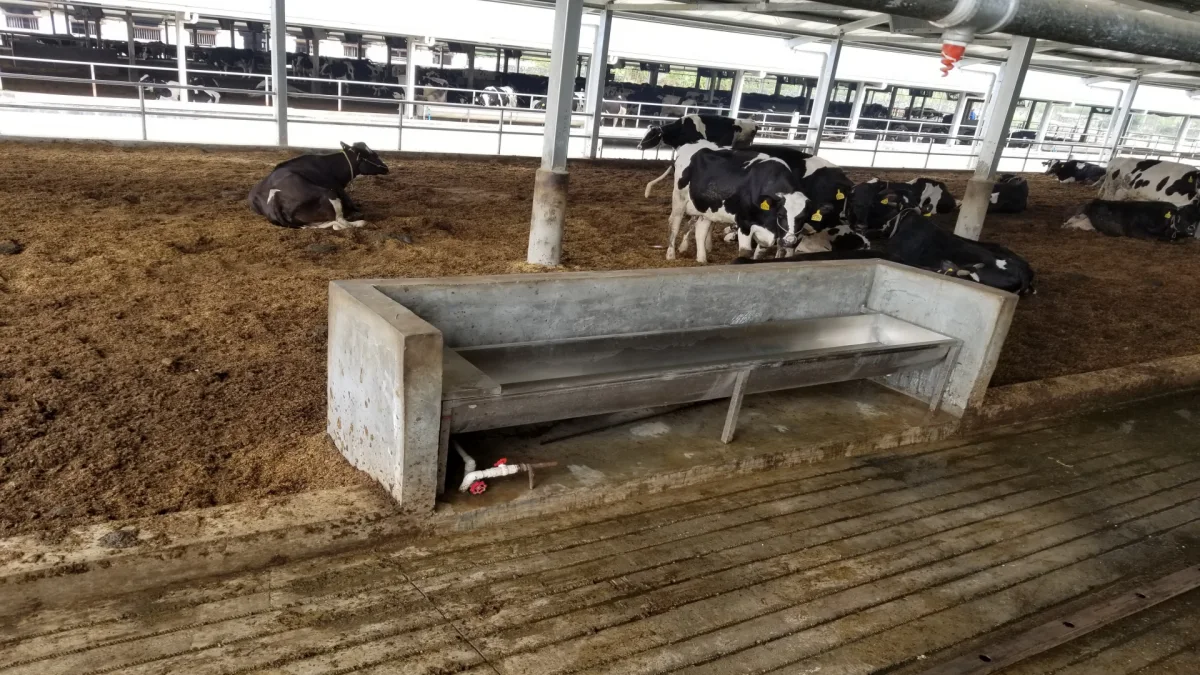
As dairy operations expand, manure management becomes an increasingly demanding daily task. A separation system designed for a small farm may not provide sufficient capacity for a large, continuously operating facility.
Several issues deserve particular attention.
High daily manure volumes
Large dairy farms must process manure consistently to prevent excessive accumulation in collection pits and storage areas. Insufficient separation capacity can create bottlenecks throughout the manure management system.
Labor-intensive handling
Frequent equipment supervision, manual material handling, and repeated cleaning can increase operating costs. Farms with limited labor availability need equipment that supports continuous operation with minimal routine intervention.
Energy consumption
Pumps, separators, conveyors, and downstream treatment equipment all contribute to operating expenses. The energy demand per cubic meter of slurry processed is therefore an important consideration when comparing systems.
Inconsistent solid output
The recovered material must have suitable moisture content and physical characteristics for its intended application. A system that separates large quantities of slurry but produces excessively wet or unsuitable solids may require additional processing.
These challenges make equipment capacity, automation, energy efficiency, and output quality central considerations in modern dairy manure management.
4. Large Dual-Motor Belt Press for High-Capacity Manure Separation
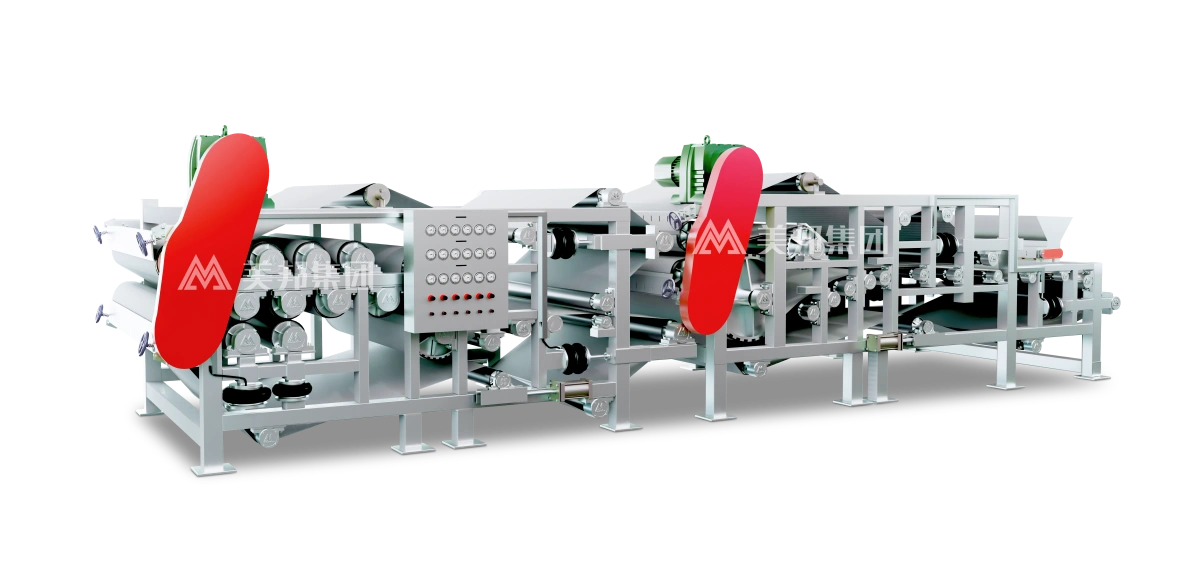
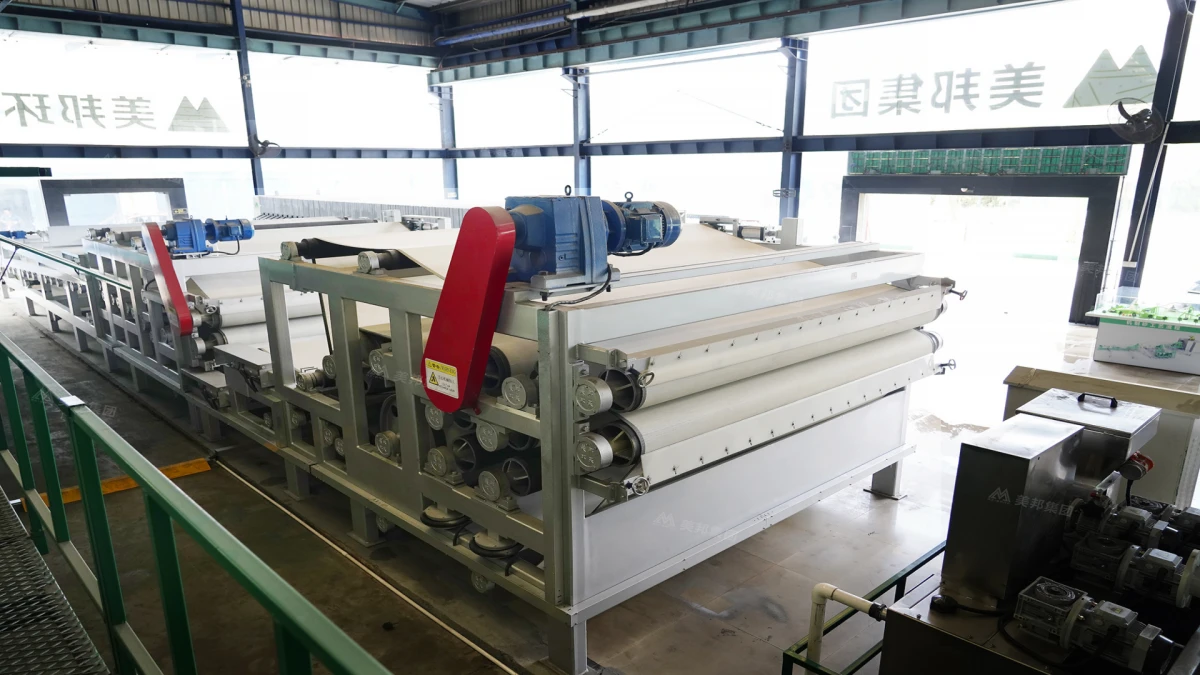
For farms handling substantial quantities of dairy manure slurry, a large dual-motor belt press is an option worth evaluating.
Designed around continuous mechanical pressing and dewatering, this type of equipment can be configured for high-volume industrial applications. Its suitability for a particular dairy farm depends on slurry characteristics, required throughput, solids recovery, and the target moisture content.
Unlike a system based on small individual separation units, a properly sized large-capacity machine can consolidate processing capacity into a more centralized installation.
High processing capacity
The principal advantage of a large dual-motor belt press is its potential to handle substantial slurry volumes through a continuous process.
For large dairy farms, higher processing capacity can help reduce equipment bottlenecks and keep manure handling operations running more consistently.
The actual throughput depends on the feed solids concentration, fiber content, slurry condition, belt width, pressing configuration, and required output dryness. Equipment capacity should therefore be established through material testing and application-specific engineering rather than relying on a single nominal rating.
Dual-motor pressing configuration
The dual-motor configuration provides a basis for designing a large pressing system around the power and operating requirements of the application.
When properly engineered, the system can support stable material feeding and pressing across a demanding production schedule. The drive arrangement, belt speed, pressing pressure, and feeding system must be matched to the characteristics of dairy manure.
For projects requiring large processing capacity, a customized dual-motor belt press can be evaluated as an alternative to installing several smaller machines.
Continuous operation and automation
Automation is another important consideration for modern dairy farms.
An integrated system can incorporate slurry feeding, conveying, belt operation, and discharge handling. Appropriate sensors, automatic controls, and protective devices can help operators monitor equipment conditions and maintain stable production.
By reducing unnecessary manual intervention, automation can make daily operations more manageable and allow farm personnel to focus on other essential tasks.
The level of automation should be specified according to the farm’s operating schedule, staffing arrangements, and maintenance capabilities.
5. Reducing Equipment Investment and Labor Costs
When evaluating manure separation equipment, the purchase price alone does not provide a complete picture of project economics.
Large farms should compare the total installed cost, processing capacity, labor requirements, energy consumption, maintenance expenses, and expected service life.
A large dual-motor belt press may offer an economic advantage when its capacity can replace several smaller separation units or reduce the need for parallel equipment installations.
Potential savings can come from:
- Fewer individual machines to install and maintain.
- Reduced duplication of feeding and discharge systems.
- Lower routine labor requirements through automation.
- More efficient use of available floor space.
- Simplified centralized operation and maintenance.
These benefits are project-dependent. A large machine is not automatically cheaper than multiple smaller units, particularly where redundancy, variable feed volumes, or independent operating lines are required.
Labor savings also depend on the degree of automation and the amount of manual handling eliminated.
For an accurate investment assessment, dairy farm operators should compare alternative system configurations using the same daily slurry volume and required output quality.
6. Improving Energy Efficiency and Environmental Performance
Energy efficiency is especially important for manure separation systems operating for many hours each day.
Mechanical pressing can provide a practical alternative to energy-intensive separation technologies in applications where its capacity and separation performance meet the farm’s requirements.
In the 2019 Journal of Dairy Science study, the tested screw and roller presses had processing capacities of approximately 9.1–20.3 m³/h and reported energy consumption of 0.10–0.35 kWh/m³. The tested decanter centrifuge processed approximately 1.5 m³/h and consumed 4.99 kWh/m³.
These figures relate to the specific machines and experimental conditions in that study. They should not be treated as universal performance figures or as a direct comparison with a large dual-motor belt press.
Nevertheless, the research illustrates why farms should evaluate throughput and energy consumption together rather than choosing equipment based on separation performance alone.
An efficient separation system can also support broader environmental objectives by recovering useful organic solids, improving manure handling, and enabling more targeted management of the liquid fraction.
The environmental benefits depend on the complete farm system, including electricity sources, manure storage, subsequent treatment, nutrient management, and the final use of the separated material.
7. From Separated Manure Solids to Recycled Cow Bedding
The recovered solid fraction may be suitable for producing recycled manure solids for cow bedding, but separation is only the first stage of the process.
Moisture content and material structure are important. The EU CAP Network’s Resilience for Dairy practice abstract identifies approximately 35% dry matter as a reference for freshly pressed RMS in the described system. Excessively wet material can encourage microbial growth, while overly dry material may generate dust.
This reference is application-specific, not a universal specification for every manure separation process.
More importantly, mechanical dewatering does not reliably eliminate pathogens. Research reviewing RMS use on dairy farms highlights the need to consider hygiene risks and monitor animal health.
Depending on local regulations and the farm’s management protocol, additional treatment or controlled handling may be necessary before the separated solids are reused as bedding. Farms should also assess storage conditions, bedding replacement frequency, barn temperature and humidity, and udder health.
For these reasons, a manure separation system intended for RMS production should be selected according to the entire process, not simply the lowest achievable moisture content.
8. Customized Manure Dewatering Equipment for Large Dairy Farms
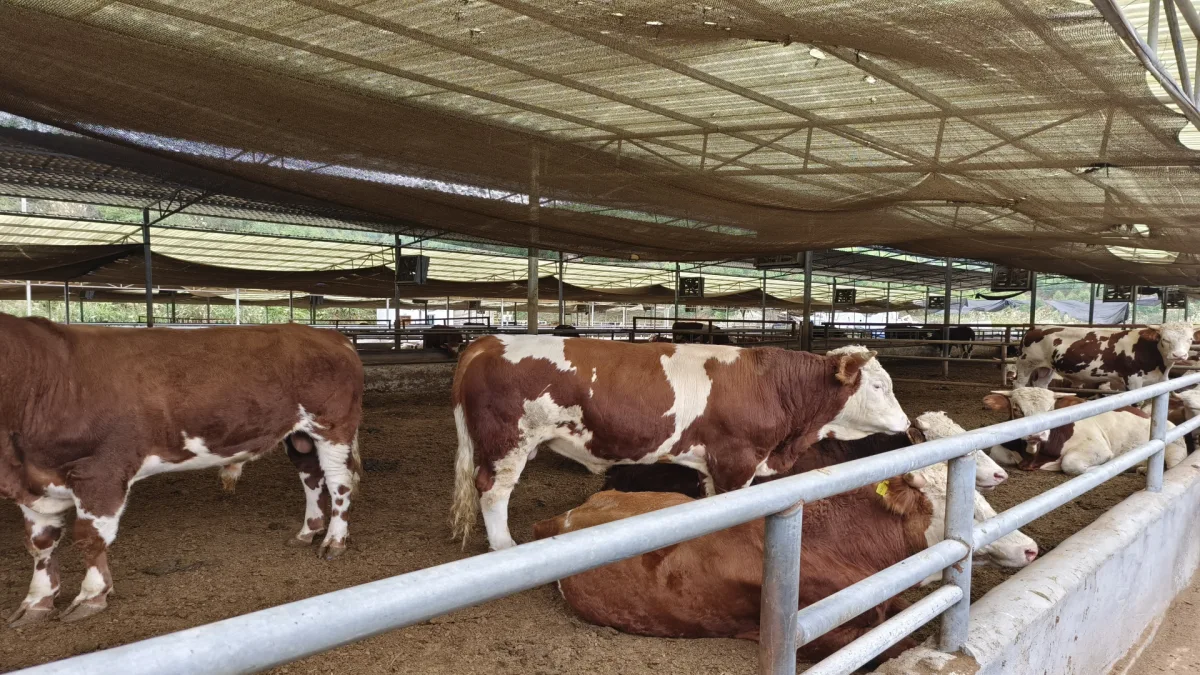
Every dairy farm has different manure characteristics, barn arrangements, daily processing requirements, and plans for using the recovered solids.
Before selecting a separation machine, operators should establish the following:
- Daily slurry volume and operating hours.
- Feed solids concentration and fiber characteristics.
- Required processing capacity.
- Target dry matter content and solid material structure.
- Requirements for liquid fraction management.
- Whether additional hygiene treatment is necessary.
- Available installation space, power supply, and automation level.
A large dual-motor belt press can then be configured around these operating requirements, with appropriate feeding, conveying, discharge, and control systems.
For large dairy farms seeking to recover manure solids while improving processing efficiency, high-capacity mechanical pressing offers a practical direction for evaluation. The objective is not simply to remove water, but to establish a reliable, economical, and manageable manure separation process.
Conclusion
Recycled manure solids offer an opportunity for large dairy farms to connect manure management with the recovery of useful bedding material. Efficient solid-liquid separation is the foundation of this approach.
A properly designed large dual-motor belt press can help address high slurry volumes, reduce equipment duplication, support automated operation, and control energy and labor costs. Its actual economic and technical advantages should be verified against the farm’s material characteristics and operating requirements.
For dairy farms, agricultural engineering companies, and manure management system integrators, choosing the right separation equipment is an important step toward more efficient resource recovery and sustainable livestock production.
Looking for a high-capacity dairy manure dewatering solution? Contact our engineering team to discuss your slurry characteristics, required processing capacity, and solid-liquid separation requirements. We can evaluate a customized dual-motor belt press configuration for your application.
Contact us via WhatsApp: +86 13926233800 to get free solutions and quotations.