
Introduction
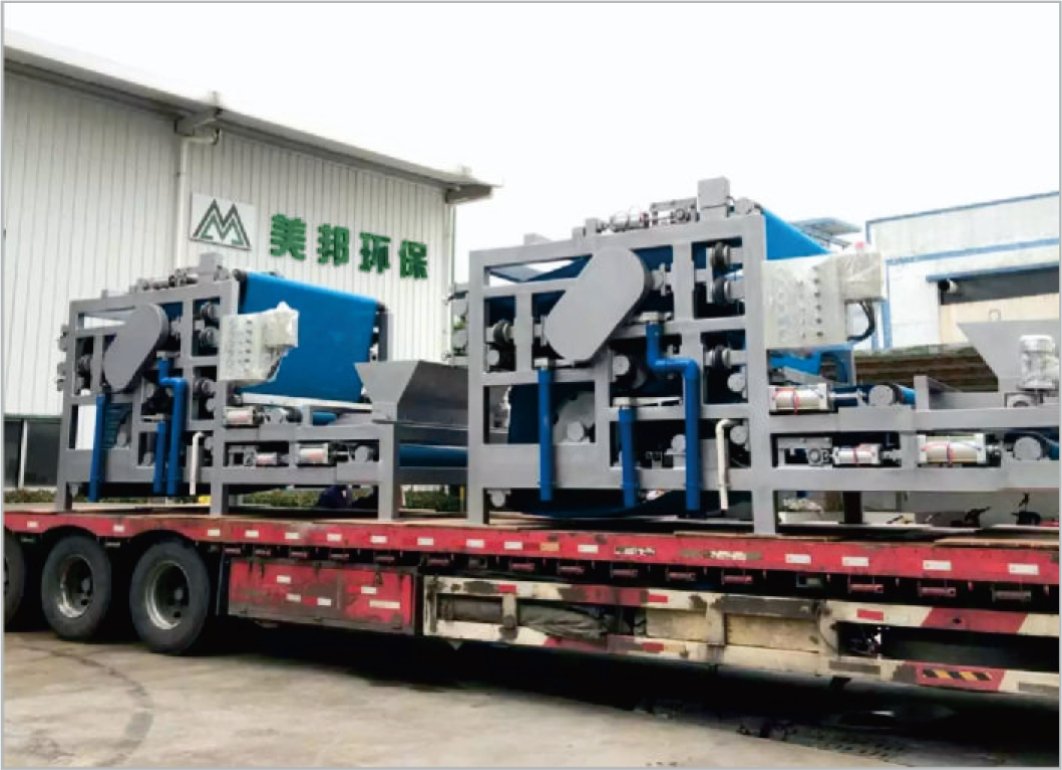
A filter press is a high-efficiency solid-liquid separation equipment designed to remove moisture from slurry or sludge, widely applied in industries such as wastewater treatment, mining, chemical processing, food production, and even emerging fields like coconut coir dewatering. Unlike ordinary dewatering equipment, it achieves deeper dewatering through pressure-driven filtration, which not only reduces waste volume significantly but also improves material recovery rate—helping enterprises cut disposal costs and meet strict environmental regulations.
As a professional manufacturer of filter press equipment, we have optimized our filter press systems based on 10+ years of industry experience, targeting the pain points of high moisture content, low efficiency, and high maintenance costs in traditional dewatering processes. Below is a detailed explanation of its working principle, types, practical applications, and professional selection guide to help you choose the most suitable equipment.
How Does a Filter Press Work?
The working principle of a filter press is based on pressure-driven solid-liquid separation, involving three core steps with practical operational details to ensure stability and efficiency:
Core Working Steps of Filter Press
- Slurry Feeding: Slurry or sludge is pumped into the closed filter chambers formed by a series of overlapping filter plates (equipped with high-quality filter cloth) through a high-pressure pump. The feeding pressure is controlled between 0.6-1.2 MPa (adjustable according to slurry viscosity), ensuring uniform distribution of slurry in each chamber and avoiding local blockage.
- Filtration Process: Under continuous pressure, the liquid in the slurry passes through the filter cloth (with a filtration precision of 1-50 μm, customizable) and is discharged as clear filtrate, while solid particles are trapped in the filter chambers to form a filter cake. During this process, our self-developed filter cloth cleaning system can automatically remove residual particles, extending the service life of the filter cloth by 30% compared to traditional models.
- Cake Discharge: After the filter cake reaches the preset thickness (usually 15-30 mm), the filter plates are opened by a hydraulic system, and the dry filter cake falls automatically for disposal or reuse. For sticky materials (such as coconut coir sludge), we add a cake release agent spraying device to avoid manual cleaning and improve work efficiency.
This integrated process ensures efficient dewatering—our filter press can reduce sludge moisture content to ≤20% for most industrial slurries, which is 10-15% lower than ordinary dewatering equipment.
Main Types of Filter Press (With Pros, Cons and Application Scenarios)
Different types of filter presses are suitable for different materials and industrial scenarios. Below is a detailed comparison to help you quickly distinguish and select:
| Filter Press Type | Core Advantages | Potential Disadvantages | Ideal Application Scenarios |
| Plate and Frame Filter Press | High filtration precision (≤1 μm), suitable for high-purity separation; simple structure, easy maintenance. | Manual operation required for plate opening and cake discharge; low efficiency for large-scale treatment. | Chemical industry, pharmaceutical industry, small-batch high-precision filtration. |
| Recessed Chamber Filter Press | Automatic plate opening and cake discharge; high efficiency, low labor cost; suitable for large-scale sludge treatment. | Higher initial investment than plate and frame type; not suitable for extremely sticky materials. | Municipal wastewater treatment, mining sludge dewatering, sand washing plants. |
| Membrane Filter Press | Diaphragm squeezing function, filter cake moisture content ≤18%; energy-saving, low operating cost. | Membrane needs regular replacement (service life 1-2 years); high requirement for slurry impurity content. | Food and beverage processing, palm oil industry, high-demand sludge dewatering. |
| Belt Filter Press | Continuous operation, high processing capacity; suitable for large-volume low-viscosity slurry. | Filtration precision is lower than other types; filter belt is easy to wear. | Municipal sludge treatment, large-scale mining wastewater treatment, coconut coir dewatering. |
Key Advantages of Our Belt Filter Press (Raw Materials & Craftsmanship)
Our belt filter press stands out in the market due to its top-tier raw materials, advanced craftsmanship, and exceptional durability—even comparable to top-grade filter presses in the industry. Here are the core highlights:
1. High-Quality Raw Materials from Joint-Venture Manufacturers
We adopt raw materials from well-known joint-venture manufacturers, which are consistent with those used in top-grade filter presses. This ensures the basic stability and reliability of the equipment, laying a solid foundation for long-term stable operation.
2. Top-Grade Rubber Coating Process & Materials
The rubber coating process and materials of our belt filter press are at the top level in the industry, enabling the equipment to be used in harsh environments such as high temperature and high acidity. This solves the problem that ordinary belt filter presses are easily damaged in harsh working conditions, greatly expanding the application scope.
3. High-Durability Roller Core & Coating Materials
The roller core of our belt filter press is made of 304 stainless steel, which has excellent corrosion resistance and wear resistance. For the coating material, we use polyurethane (PU) on a large scale—this material alone is 40% more expensive than that used by ordinary manufacturers. The combination of 304 stainless steel roller core and PU coating significantly enhances the durability and service life of the equipment.
4. Exceptional Durability & High Resale Value
Thanks to the high-quality raw materials and advanced craftsmanship, our belt filter press is extremely durable. As a result, our used equipment is very popular in the market. Especially in large-scale mines and sand and gravel plants, both our plate and frame filter press and belt filter press have been highly recognized and favored by customers. The resale price of our used equipment is more than 50% higher than that of competitors’ products, fully verifying the superior quality of our equipment.
Note: Our factory can provide customized filter press solutions according to your specific material characteristics (viscosity, particle size) and treatment requirements (moisture content, processing capacity).
Applications of Filter Press (With Practical Cases)
Filter presses are widely used in various industries, and we have accumulated rich practical cases to prove their value in different scenarios:
Industry-Specific Applications & Practical Cases
- Municipal wastewater treatment: Applied in a municipal sewage treatment plant in Malaysia, our recessed chamber filter press handles 500 tons of sludge per day, reducing sludge volume by 70% and cutting disposal costs by 60% compared to the original belt press.
- Mining and mineral processing: For a gold mine in Indonesia, our membrane filter press dewaters tailings sludge, achieving a filter cake moisture content of 18%, which can be directly used as backfill material, realizing resource reuse. In large-scale mines, our plate and frame filter press and belt filter press are highly popular due to their durability and stability.
- Sand washing plants: In a sand washing plant in Vietnam, our belt filter press processes 300 tons of sand washing sludge per day, solving the problem of sludge pollution and recovering 85% of usable sand. Our equipment is also widely used in domestic large sand and gravel plants, with excellent feedback.
- Chemical manufacturing: Used in a chemical plant producing dyestuffs, our plate and frame filter press achieves high-precision filtration of reaction slurry, reducing product loss and improving product purity.
- Food and beverage processing: In a fruit juice factory in Thailand, our membrane filter press separates fruit residue from juice, ensuring juice clarity and extending shelf life.
- Coconut coir and biomass industries: A key application scenario for our belt filter press—targeting the high moisture content of coconut coir sludge, our customized equipment can reduce moisture content to 25% or below, making it easy to dry and reuse as organic fertilizer or planting substrate.
How to Choose the Right Filter Press? (Professional Selection Guide)
Choosing the right filter press is crucial to ensuring dewatering efficiency and reducing costs. Follow these 4 steps to select the most suitable equipment for your needs:
Step-by-Step Selection Guide
- Clarify material characteristics: First, determine the viscosity, particle size, and solid content of the slurry/sludge. For example, sticky materials (coconut coir, food sludge) are suitable for membrane filter presses or belt filter presses with cake release devices; high-precision requirements (chemical, pharmaceutical) are suitable for plate and frame filter presses.
- Confirm treatment requirements: Clarify the daily processing capacity (tons/day) and the required filter cake moisture content. If the moisture content requirement is ≤20%, a membrane filter press is preferred; if large-scale continuous processing is needed, a belt filter press or recessed chamber filter press is more suitable.
- Consider operational cost: Comprehensive comparison of initial investment, maintenance cost, and energy consumption. For example, although the initial investment of a membrane filter press is higher, its low energy consumption and long service life can save costs in the long run; the plate and frame filter press has a low initial investment but high labor cost. Our belt filter press, with its high durability, can reduce long-term maintenance and replacement costs.
- Choose a reliable manufacturer: Select a manufacturer with rich industry experience and customized capabilities (like us). We provide one-stop services from equipment selection, customization, installation to after-sales maintenance, avoiding the trouble of mismatched equipment.
Advantages of Our Filter Press (Compared to Competitors)
Compared with traditional filter presses and other competitors, our products have 5 core advantages:
Core Competitive Advantages
- High dewatering efficiency: Equipped with a high-pressure hydraulic system and customized filter cloth, the filter cake moisture content can be as low as 18%, which is 10-15% lower than the industry average.
- Energy-saving and low consumption: The optimized hydraulic system reduces energy consumption by 20% compared to traditional models; the filter cloth cleaning system extends its service life, reducing replacement costs.
- Intelligent operation: Full-automatic control system, supporting remote monitoring and operation, reducing labor input by 50%.
- Strong customization: Can be customized according to different industries and materials, such as coconut coir dewatering special filter press, mining tailings special filter press.
- Reliable after-sales service: 24-hour online technical support, on-site installation and commissioning, and a 1-year warranty, ensuring stable operation of equipment.
FAQs (Answering Your Most Concerned Questions)
Common Questions & Professional Answers
- Q: Can a filter press handle high-viscosity sludge (such as coconut coir sludge)? A: Yes. We have a customized filter press for high-viscosity materials, equipped with a special filter cloth and cake release device, which can effectively handle coconut coir sludge, food sludge, and other high-viscosity materials, ensuring smooth cake discharge.
- Q: What is the maintenance cost of a filter press? A: The annual maintenance cost is about 5-8% of the equipment price, mainly including filter cloth replacement, hydraulic oil replacement, and regular inspection. Our filter press has a modular design, which makes maintenance convenient and reduces maintenance time by 30%. Especially our belt filter press, with its high-quality materials and craftsmanship, has lower maintenance costs in the long run.
- Q: How long is the service life of a filter press? A: Under normal operation and regular maintenance, the service life of the main body is 8-10 years, and the filter cloth needs to be replaced every 1-2 years (depending on the use scenario). Our belt filter press, with 304 stainless steel roller core and PU coating, has a longer service life than ordinary products.
- Q: Can you provide on-site installation and commissioning? A: Yes. We provide on-site installation, commissioning, and operator training services to ensure that your team can use the equipment proficiently.
- Q: Why is the resale price of your used filter press higher than that of competitors? A: Because our equipment adopts top-grade raw materials and advanced craftsmanship, which is extremely durable. Even after long-term use, the performance remains stable, so it is very popular in the second-hand market, and the resale price is more than 50% higher than that of competitors.
Conclusion
A filter press is an essential solid-liquid separation equipment for modern industrial production, especially in the context of increasingly strict environmental regulations. It not only solves the problem of sludge pollution but also helps enterprises reduce costs and realize resource reuse.
Whether you are in municipal wastewater treatment, mining, chemical industry, or coconut coir processing, choosing the right filter press can significantly improve operational efficiency. Our filter press, with its high efficiency, energy-saving, and customizable advantages, has been widely recognized by customers in more than 20 countries and regions. Especially our belt filter press, with top-tier raw materials, advanced craftsmanship, and exceptional durability, has become the first choice for large-scale mines and sand and gravel plants.
If you need to select a filter press suitable for your industry or want to know more about filter press customization solutions, please contact us—we will provide you with professional advice and high-quality equipment.