
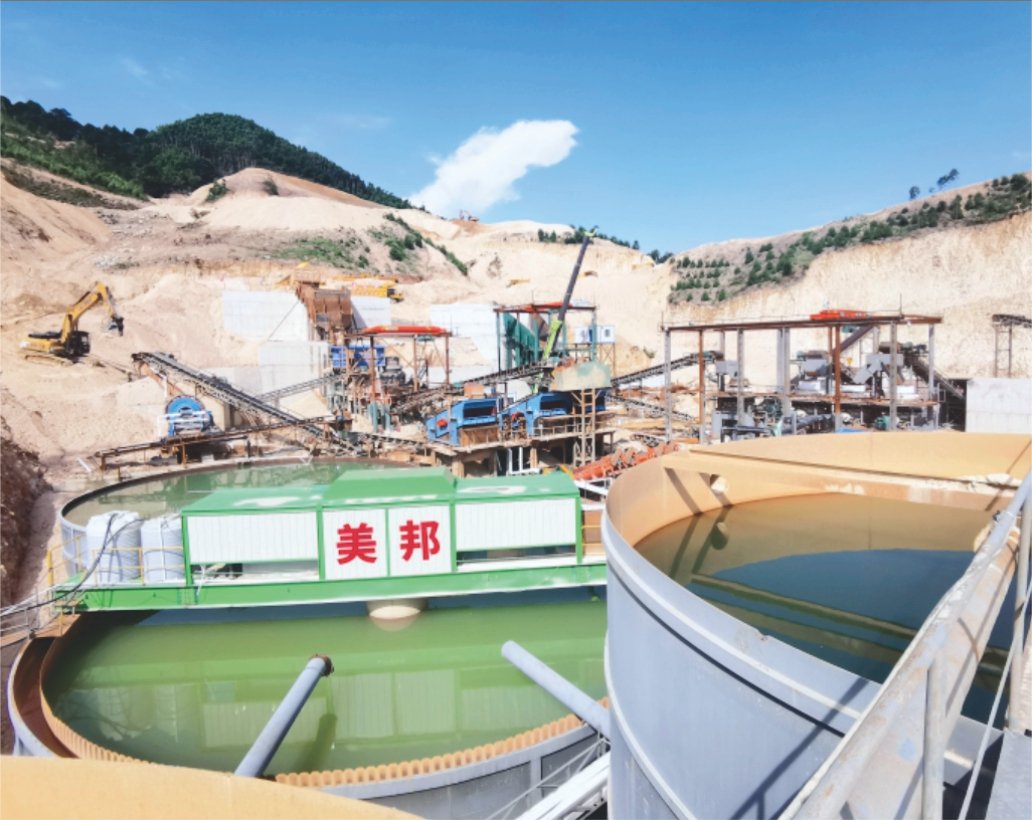

Environmental Challenges in Global Mineral Processing
Managing mine tailings wastewater remains a critical environmental and operational challenge for the global mineral processing and extraction industry. During the mineral beneficiation process, mining operations generate massive volumes of liquid slurry containing pulverized rocks, residual chemicals, and water. Historically, mining companies simply pumped this hazardous wastewater into massive tailing ponds for long-term settling and natural solar evaporation.
However, modern environmental regulations and increasing global water scarcity have rendered traditional tailing ponds both economically and ecologically unviable. Catastrophic tailing dam failures have caused unprecedented environmental destruction, leading to severe financial penalties and permanent operational closures for mining corporations. Implementing robust solid-liquid separation technology is absolutely essential to ensure regulatory compliance and maximize critical process water recovery.
The Strategic Shift to Dry Stack Tailings Management
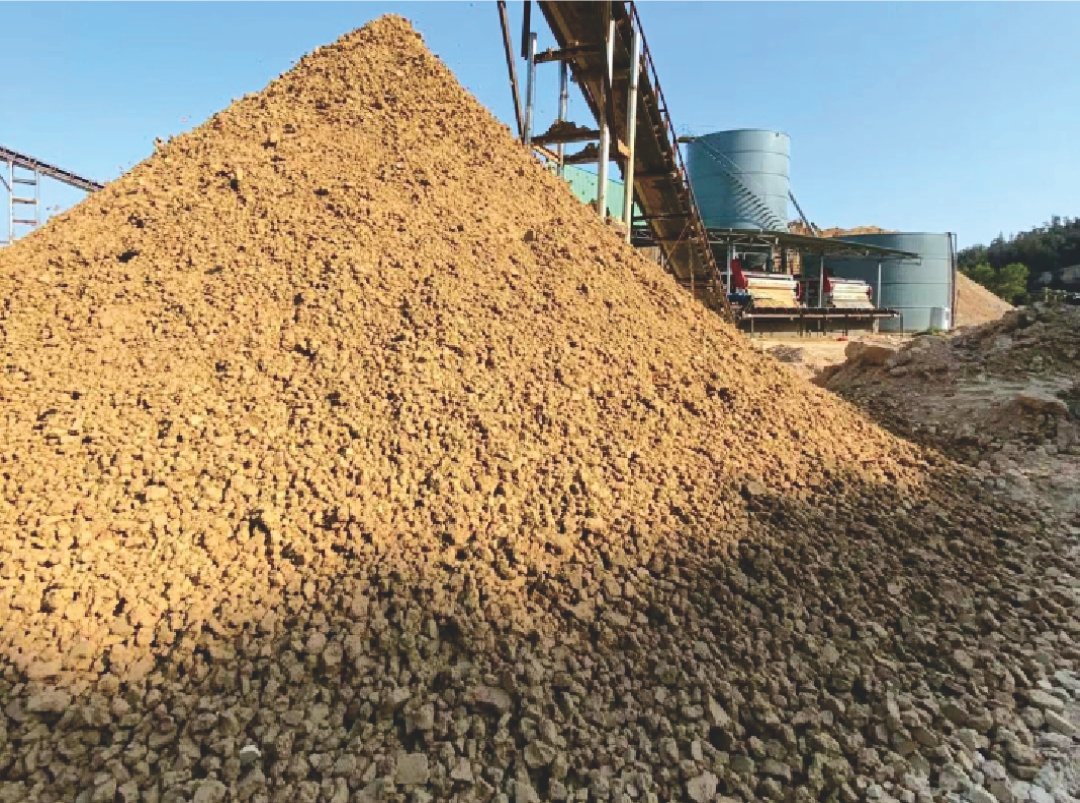
The global mining industry is rapidly adopting dry stack tailings management as the safest and most sustainable waste disposal methodology. This innovative approach involves mechanically dewatering the liquid slurry until it becomes a solid, structurally stable, and easily stackable filter cake. Dry stacking completely eliminates the need for massive liquid retention dams, fundamentally reducing the risk of catastrophic structural failures.
Furthermore, this method significantly reduces the geographical footprint required for waste storage, lowering overall land acquisition and long-term maintenance costs. Transporting and stacking solid filter cakes is vastly more manageable and significantly less hazardous than pumping millions of gallons of liquid slurry. To achieve these optimal dry stacking conditions, mining operators require heavy-duty mechanical equipment capable of processing massive volumes of abrasive slurry.
Deep Dive: Belt Filter Presses for Tailings Dewatering
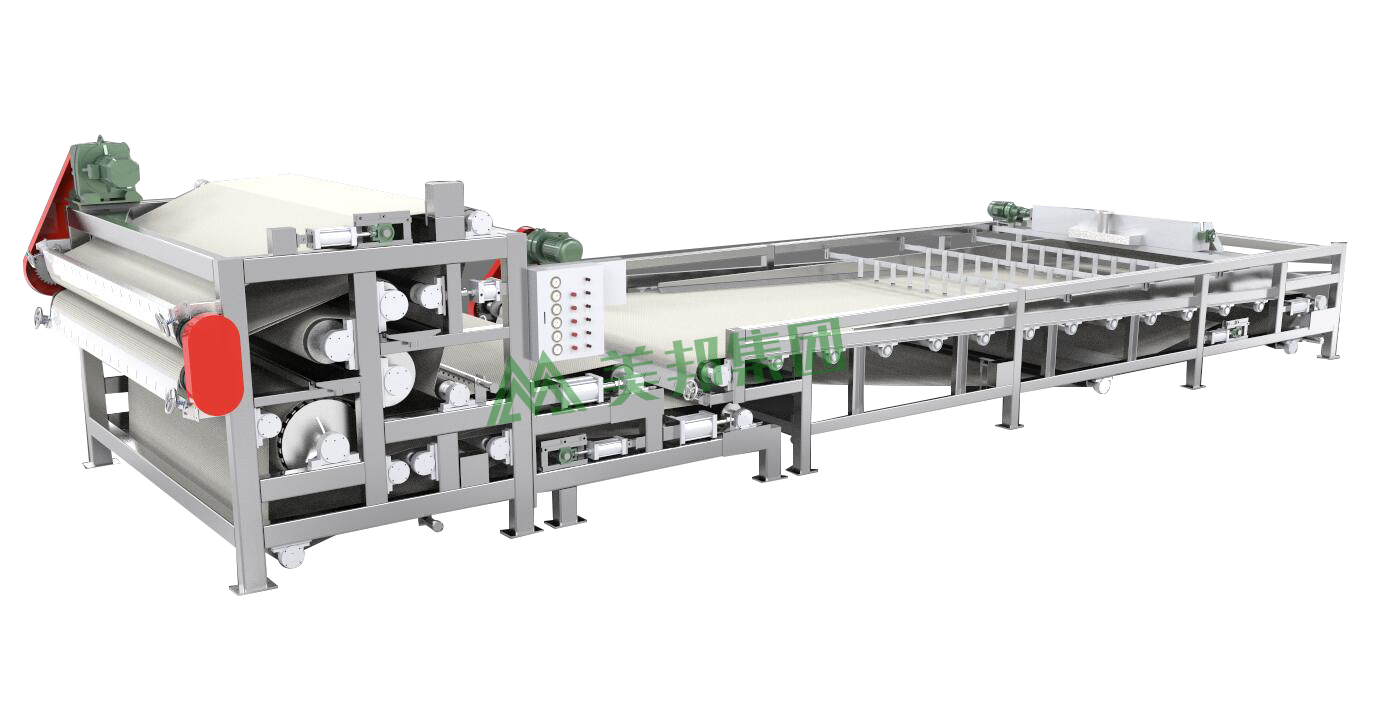
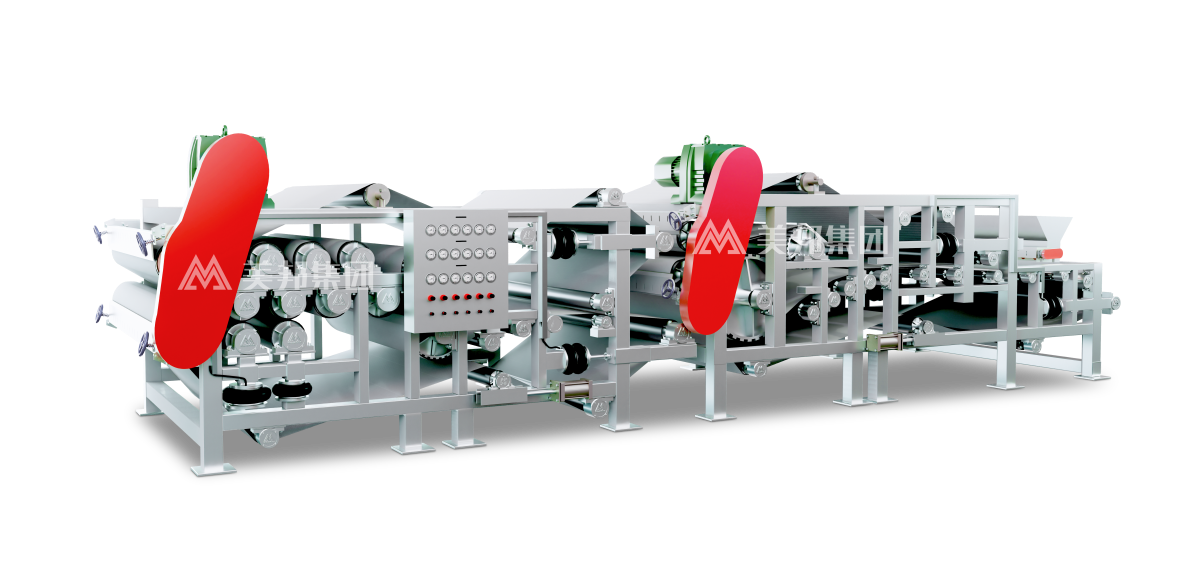
Our industrial belt filter presses are meticulously engineered to handle the rigorous daily demands of modern mine tailings dewatering. Leveraging fifteen years of manufacturing and design experience, we build high-capacity presses that deliver exceptionally consistent filter cake dryness. Unlike alternative technologies, belt filter presses provide continuous, uninterrupted dewatering, which is essential for processing the enormous volumes generated by active mines.
Mining facilities simply cannot afford operational bottlenecks caused by slow, inefficient wastewater treatment systems that disrupt primary mineral extraction. Our continuous belt filter presses effortlessly keep pace with your primary production lines, ensuring smooth and highly efficient daily operations. By utilizing progressive mechanical pressure, these robust machines consistently transform highly saturated mineral sludge into manageable, solid waste material.
The Critical Role of Polymer Flocculation
Effective mechanical dewatering of fine mineral particles is virtually impossible without proper chemical pre-conditioning of the incoming wastewater slurry. The dewatering process inevitably begins with precise polymer dosing, which actively encourages suspended microscopic mineral particles to agglomerate. We integrate advanced automated polymer preparation and dosing systems directly into our complete tailings wastewater treatment solutions.
These intelligent dosing systems precisely inject specialized chemical flocculants into the slurry stream immediately before it enters the belt filter press. The polymers chemically bind the ultra-fine mineral dust together, creating significantly larger, heavier flocs that release trapped water much more readily. Maintaining an optimized flocculation process guarantees maximum water drainage during the subsequent mechanical pressing stages, drastically improving your overall equipment throughput.
The Continuous Mechanical Dewatering Process Explained
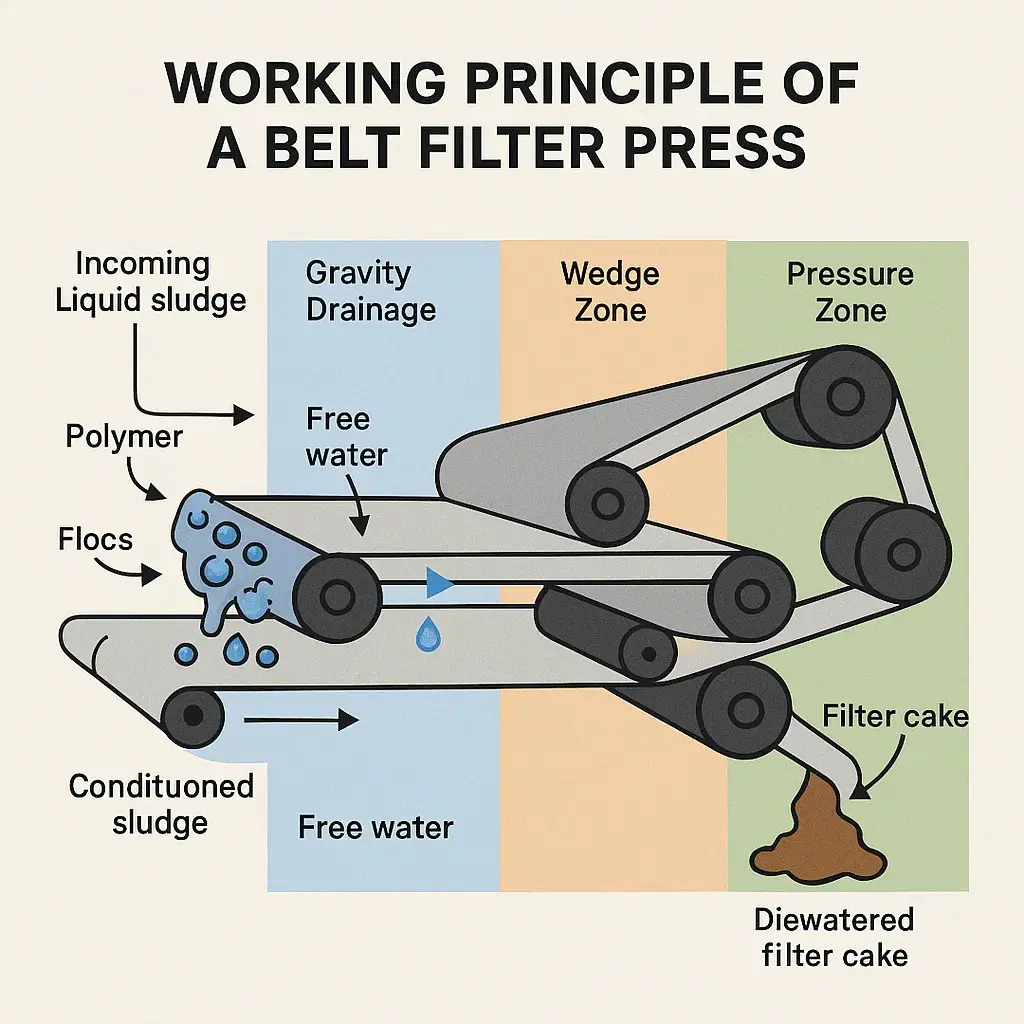
Once the mineral slurry is properly flocculated, it enters the belt filter press, flowing seamlessly through three distinct operational zones. Each progressive zone is meticulously designed to apply precisely calibrated physical forces to extract maximum moisture from the solid material.
The Initial Gravity Drainage Zone
The chemically conditioned slurry first flows evenly onto the rapidly moving, highly porous lower belt within the designated gravity drainage zone. Here, a significant percentage of the free-flowing water rapidly drains away through the synthetic belt purely via natural gravitational forces. Ensuring maximum water removal in this initial stage is critically important for establishing a stable sludge blanket for subsequent pressurization.
The Crucial Wedge Compression Zone
Following extensive gravity drainage, the thickened sludge enters the wedge zone, where the upper and lower filter belts gradually converge. This decreasing vertical space applies gentle, escalating pressure to the mineral material, carefully squeezing out additional trapped water without extruding the sludge. This gradual pressure application is critical for establishing a structurally sound filter cake before the material enters the aggressive high-pressure system.
The High-Pressure Roller Zone
Finally, the stabilized mineral material passes between multiple high-pressure rollers configured in a precise, decreasing-diameter sequence to maximize extraction. These heavy-duty rollers physically squeeze the remaining moisture from deep within the mineral matrix using immense mechanical leverage. The final high-shear rollers forcefully manipulate the filter cake, breaking internal water pockets to achieve the absolute maximum possible dryness.
Engineering Design for Highly Abrasive Mining Slurry
Mine tailings are notoriously abrasive, capable of rapidly degrading standard industrial equipment and causing unacceptable operational downtime and financial losses. Processing materials like crushed quartz, iron ore, or copper tailings requires machinery built to exceptionally high durability standards. We manufacture our heavy-duty belt filter presses utilizing premium-grade structural carbon steel heavily coated in specialized anti-corrosion marine epoxy.
Furthermore, we integrate highly reinforced, incredibly durable synthetic filter belts specifically designed to withstand the constant abrasion of sharp mineral particles. The internal high-pressure rollers are completely rubber-coated or manufactured from hardened stainless steel to resist aggressive chemical wear over time. We additionally utilize oversized, fully sealed heavy-duty bearings to completely prevent fine mineral dust from infiltrating and destroying moving mechanical parts.
Accommodating Various Mineral Characteristics
The global mining sector processes an incredibly diverse range of minerals, each presenting totally unique slurry and dewatering characteristics. Coal washery tailings behave fundamentally differently than highly acidic copper tailings or ultra-fine gold recovery wastewater streams. Our highly experienced engineering team thoroughly analyzes your specific mineral slurry to customize the operational parameters of your new belt filter press.
We meticulously select the optimal belt porosity, roller configuration, and operational belt speed to perfectly match your specific geological material. This high level of customized engineering ensures that your mining facility achieves maximum dewatering efficiency regardless of your specific mineral output.
Sustainable Closed-Loop Water Management Systems
Effective solid-liquid separation allows modern mining facilities to recycle clear wastewater directly back into the primary mineral extraction process. This closed-loop water management system significantly lowers overall operational expenses while effectively protecting surrounding aquatic ecosystems from hazardous contamination. In many remote mining locations, securing reliable access to fresh water is tremendously difficult and economically burdensome for operators.
Drastically Reducing Freshwater Consumption
By successfully recovering up to ninety percent of the process water, mines can drastically reduce their reliance on scarce local freshwater resources. This vital capability is exceptionally valuable for mining operations located in arid regions, such as parts of Australia, Africa, or South America. Continuous process water recycling ensures completely uninterrupted mineral processing even during extended periods of severe regional drought or strict municipal rationing.
Lowering Hazardous Waste Disposal Costs
Efficient, continuous dewatering minimizes the overall volume of hazardous tailings, thereby substantially reducing expensive transportation and long-term disposal costs. Hauling solid, compacted filter cakes to a dry stacking facility is vastly more economical than managing massive volumes of heavy, water-laden sludge. By significantly reducing the total weight and volume of your daily waste output, your facility will immediately realize massive logistical savings.
Key Maintenance Strategies for Maximum Uptime
Maintaining high operational uptime is absolutely essential for maximizing profitability within any large-scale, continuous mineral processing facility. Unexpected equipment failures in the wastewater treatment sector can forcefully halt your entire primary mineral extraction production line. Therefore, we specifically design our continuous belt filter presses for extreme reliability and exceptionally straightforward daily maintenance routines.
Automated Belt Washing Systems
Our belt filter presses feature highly robust automated high-pressure spray bars that continuously wash the porous belts during active operation. This reliable self-cleaning mechanism prevents fine mineral particles from blinding the microscopic belt pores, ensuring completely consistent water drainage throughout the shift. By utilizing recycled filtrate water for these spray bars, the system maintains high efficiency without unnecessarily consuming valuable fresh water resources.
Simplified Mechanical Interventions
Furthermore, we intelligently design our heavy machinery with easily accessible external lubrication points and quickly replaceable modular mechanical components. When routine maintenance or belt replacements are eventually required, your on-site engineering team can complete the necessary interventions rapidly and safely. By strictly following our comprehensively documented maintenance schedules, operators can effortlessly maximize the operational lifetime of their critical dewatering equipment.
Integrating Smart PLC Automation for Mining Operations
Managing complex wastewater treatment in harsh mining environments requires sophisticated automation to completely eliminate the risks associated with human error. We integrate advanced Siemens or Allen-Bradley PLC control systems directly into our industrial belt filter presses for seamless centralized management. These smart automated systems continuously monitor crucial operational parameters, including belt tension, motor loads, and hydraulic pressures in absolute real time.
If the automated sensors detect sudden mechanical overload or insufficient polymer dosing, the system automatically adjusts operational speeds to prevent damage. Operators can easily monitor and control the entire dewatering facility directly from a centralized, climate-controlled control room using intuitive touchscreen interfaces. This advanced automation drastically reduces the number of required operational personnel while simultaneously ensuring superior safety and consistently optimized processing efficiency.
A Trusted Global Manufacturer of Dewatering Equipment
With a highly proven track record of over three hundred global installations, our Guangzhou-based factory delivers exceptionally reliable continuous dewatering solutions. Our heavy-duty equipment currently operates in over one hundred countries, demonstrating exceptional long-term durability in the absolute toughest global mining environments. We deeply understand that mining corporations require trusted manufacturing partners who can deliver robust machinery alongside comprehensive, long-term technical support.
Through fifteen continuous years of dedicated technological innovation, we have completely perfected the exact science of industrial solid-liquid separation. From initial slurry analysis to customized equipment manufacturing, global logistics, and final on-site commissioning, we provide an unparalleled turnkey experience. Reach out to our technical engineering specialists today to discuss how our robust belt filter presses can drastically upgrade your tailings management strategy. Let us provide you with the advanced machinery required to achieve complete environmental compliance and optimize your processing profitability.