

Background
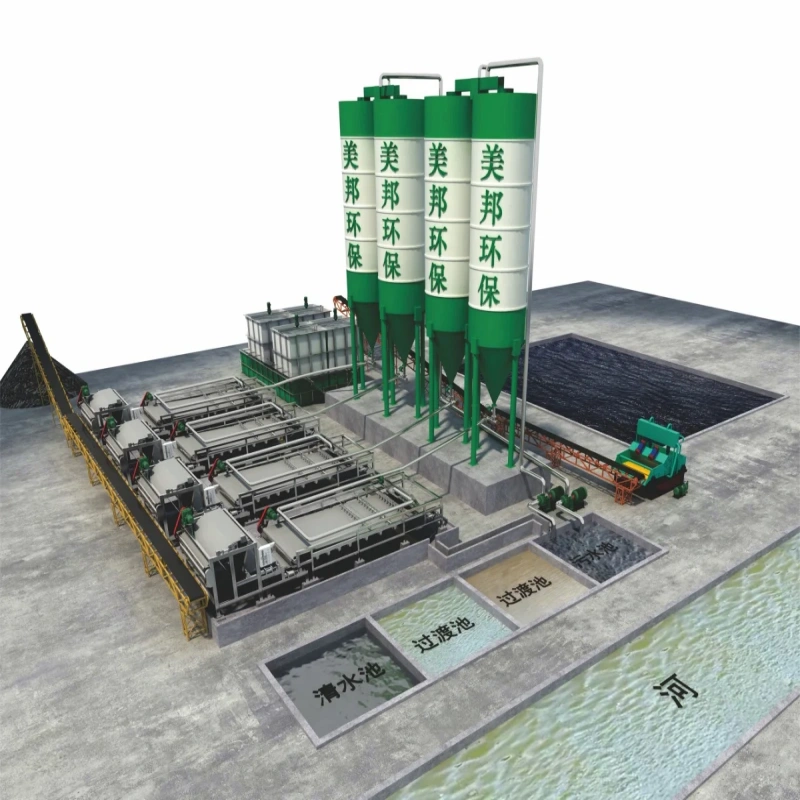
A large industrial park in Guangdong Province operates a centralized wastewater treatment facility responsible for treating wastewater generated by multiple manufacturing enterprises within the park.
As industrial production continued to grow, the wastewater treatment plant faced increasing pressure to handle larger volumes of sludge generated during the treatment process. The facility processes approximately 30,000 cubic meters of industrial wastewater per day, making sludge management a critical component of overall plant performance.
While the existing treatment process remained effective, the park management committee recognized the need to expand sludge dewatering capacity to support future growth and ensure long-term operational stability.
However, the project faced a significant challenge: limited available space within the wastewater treatment plant.
Any expansion solution would need to increase treatment capacity without requiring major facility enlargement.
The Challenge
When the industrial park initiated the upgrade project, several equipment suppliers proposed conventional sludge dewatering solutions based on standard belt filter press technology.
Although these solutions were technically capable of achieving the required sludge treatment capacity, they presented a practical problem.
Due to the relatively limited processing capacity of individual machines, some proposals required the installation of approximately 30 belt filter presses to meet the plant’s operational requirements.
For the management committee, this raised several concerns:
- Insufficient space for installing a large number of machines
- Increased civil construction requirements
- More complex piping and electrical systems
- Higher installation costs
- Greater maintenance workload
- Increased operational complexity
Simply put, the wastewater treatment plant did not have enough available space to comfortably accommodate such a large equipment layout.
The committee therefore began searching for a more efficient solution capable of delivering the required treatment capacity with fewer machines.
A Different Approach
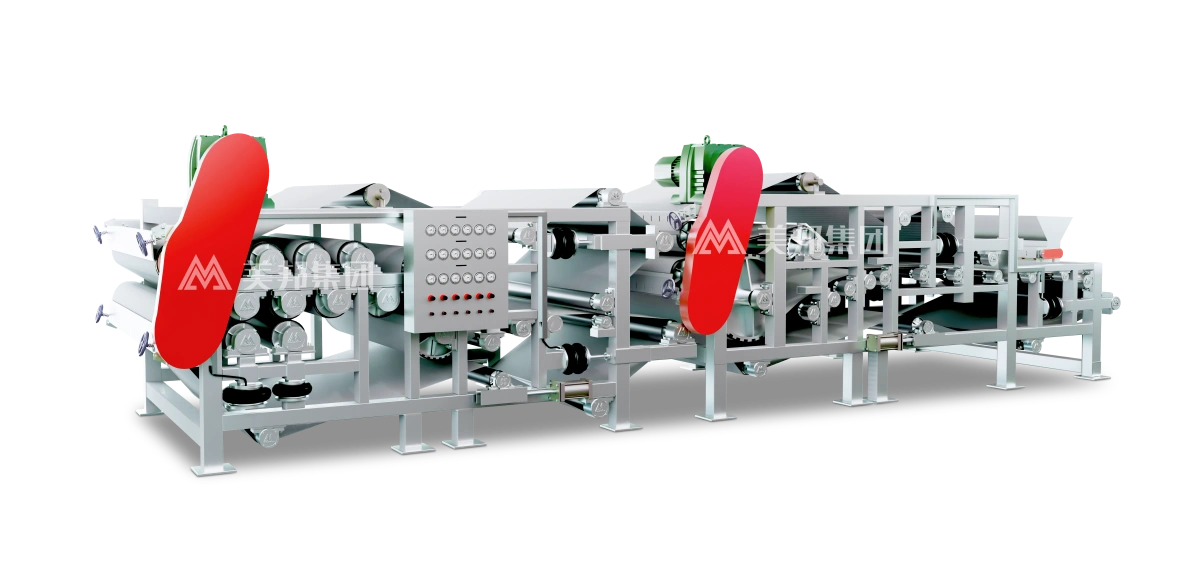
During the evaluation process, the committee reviewed Meibang Group’s Dual-Motor High-Efficiency Belt Filter Press technology.
Unlike conventional belt filter presses, the dual-motor design was developed specifically for applications requiring higher throughput and improved dewatering performance.
The key advantage became immediately apparent during the technical comparison.
While some alternative proposals required nearly 30 machines, Meibang’s solution could achieve the same treatment target using only 18 units.
This represented a reduction of approximately 40% in equipment quantity.
For the project team, the significance went far beyond simply reducing the number of machines.
Fewer units meant:
- Reduced installation footprint
- Simplified plant layout
- Lower infrastructure requirements
- Fewer electrical connections
- Reduced piping complexity
- Easier future maintenance
- Lower long-term operating costs
The management committee was particularly impressed by the unusually high processing capacity achieved by each individual machine.
For a wastewater treatment facility where available space was becoming increasingly valuable, the ability to achieve the required capacity with significantly fewer units provided a highly practical solution.
Following technical evaluations and project discussions, the committee selected Meibang’s high-capacity belt filter press system.
System Implementation
The new sludge dewatering system was integrated into the wastewater treatment plant as part of the facility upgrade program.
The installation was designed to maximize operational efficiency while minimizing disruption to ongoing wastewater treatment activities.
The complete dewatering process includes:
- Sludge conditioning and polymer dosing
- Gravity drainage
- Progressive compression
- Multi-stage roller pressing
- Automatic belt cleaning
This configuration allows sludge to be processed continuously, making the system particularly suitable for large wastewater treatment facilities operating around the clock.
Unlike batch-operated dewatering equipment, the belt filter press provides uninterrupted sludge processing, helping maintain stable plant operation under varying treatment loads.
Why the High-Capacity Design Matters
For large industrial wastewater treatment plants, the performance of individual machines has a direct impact on overall project economics.
In many facilities, increasing treatment capacity often means installing additional equipment.
However, additional machines also bring additional costs.
These may include:
- More building space
- Larger foundations
- Additional electrical systems
- More pumps and pipelines
- Increased spare parts inventory
- Higher maintenance labor requirements
By increasing the processing capacity of each machine, the dual-motor belt filter press addresses these issues at their source.
Instead of relying on a larger number of standard units, the facility can achieve the required throughput with fewer machines.
This approach not only saves space but also simplifies long-term plant management.
For wastewater treatment operators, fewer machines generally mean fewer maintenance points, fewer potential failures, and lower overall operational complexity.
Operational Results
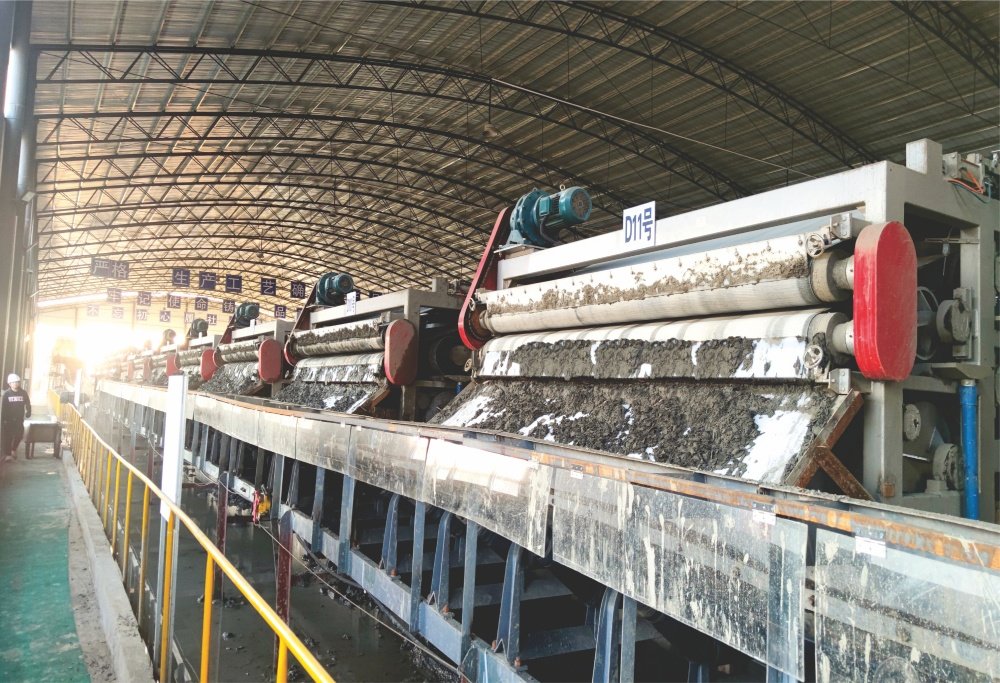
After commissioning, the upgraded dewatering system quickly demonstrated its effectiveness.
Stable Continuous Operation
The equipment successfully maintained reliable performance under continuous operating conditions.
Plant operators reported stable operation even during periods of increased sludge production.
Increased Sludge Handling Capacity
The new system provided sufficient capacity to support both current wastewater treatment requirements and future expansion plans.
The facility gained additional operational flexibility without requiring major site modifications.
Efficient Use of Available Space
One of the project’s most significant achievements was solving the site’s space limitation challenge.
By reducing the required equipment count from approximately 30 machines to 18 machines, the project achieved the necessary treatment capacity while making efficient use of the existing facility footprint.
Simplified Operations
The reduced number of machines resulted in a simpler system layout and lower maintenance requirements.
Operators benefited from easier daily management and improved accessibility for routine inspections and servicing.
Improved Cost Efficiency
The optimized equipment configuration helped reduce infrastructure requirements and contributed to lower long-term operating costs.
The benefits extended beyond equipment procurement to include installation, maintenance, and plant operation.
Customer Feedback
According to representatives of the industrial park management committee, one of the most impressive aspects of the project was the processing capacity achieved by the dual-motor belt filter press system.
During the evaluation stage, the committee had expected that a large expansion in sludge treatment capacity would require a substantial increase in equipment quantity.
The ability to achieve the required throughput with only 18 machines was therefore viewed as a significant advantage.
The client also highlighted the system’s stable operation, efficient use of plant space, and simplified maintenance requirements as key benefits following implementation.
Conclusion
This project demonstrates that in large industrial wastewater treatment facilities, increasing treatment capacity is not always about installing more equipment.
By improving the performance of individual machines, it is possible to achieve substantial capacity gains while reducing equipment quantity, installation complexity, and space requirements.
For wastewater treatment plants facing expansion challenges, limited installation space, or rising sludge volumes, high-capacity belt filter press technology offers a practical and cost-effective solution.
In this Guangdong industrial park, the ability to reduce equipment requirements from approximately 30 machines to 18 machines ultimately became the deciding factor—allowing the facility to expand sludge treatment capacity without expanding its footprint.
The result was a more efficient, more manageable, and more sustainable wastewater treatment operation prepared for future growth.