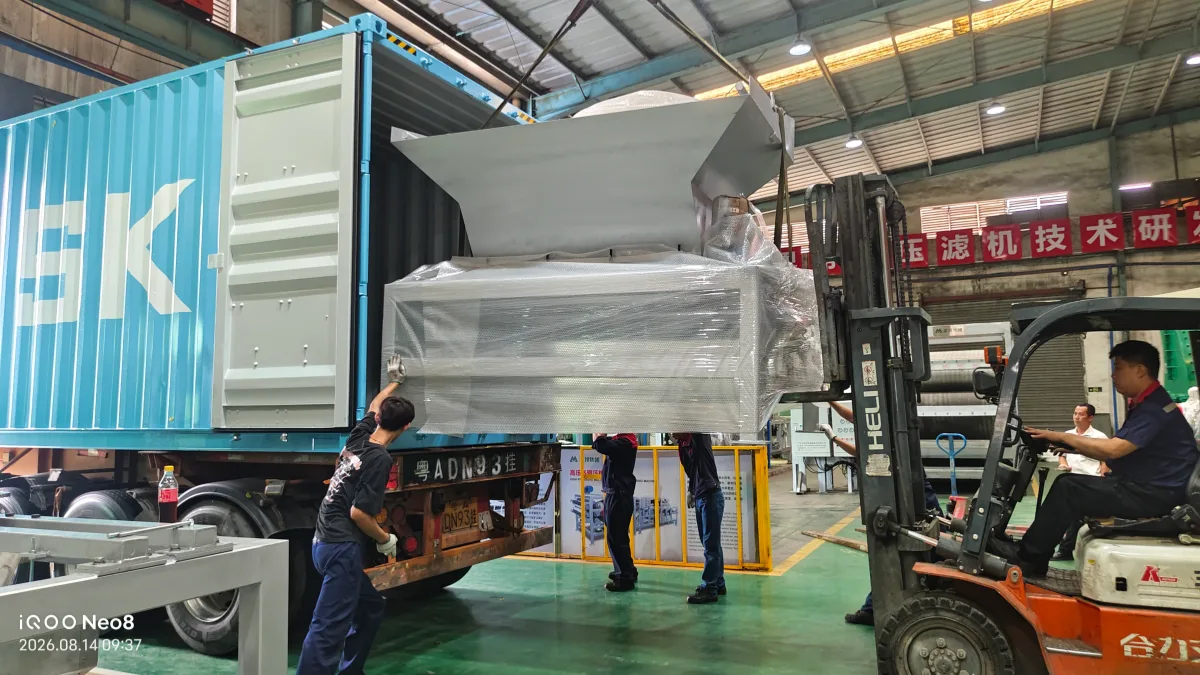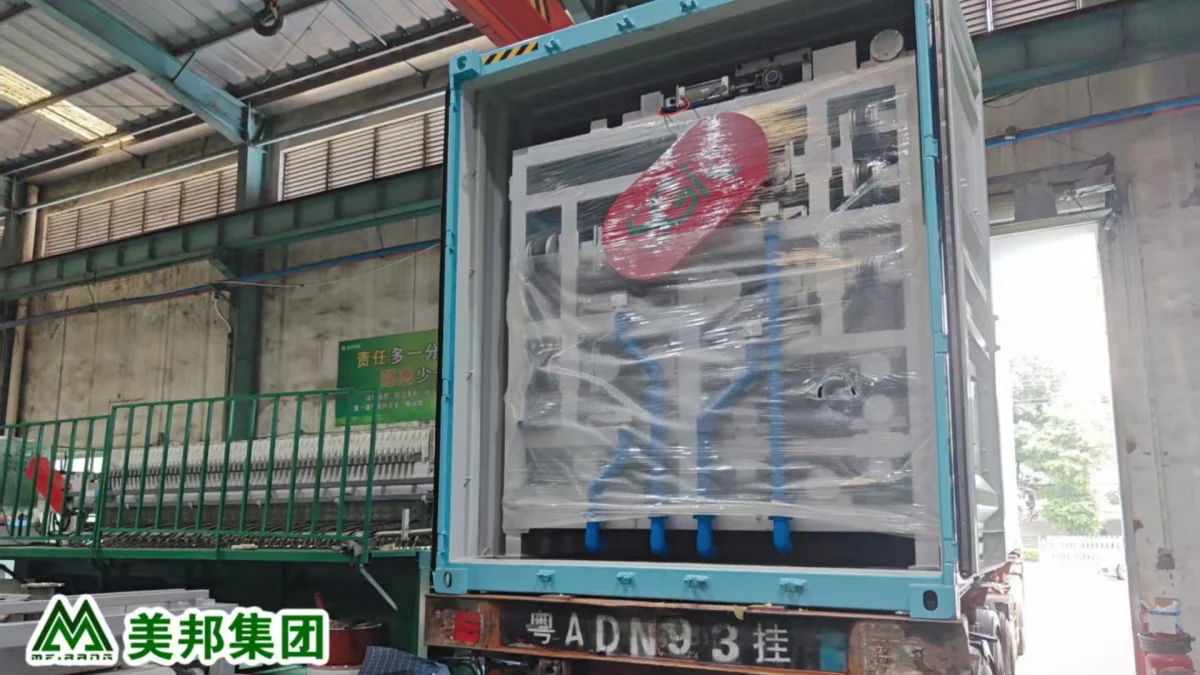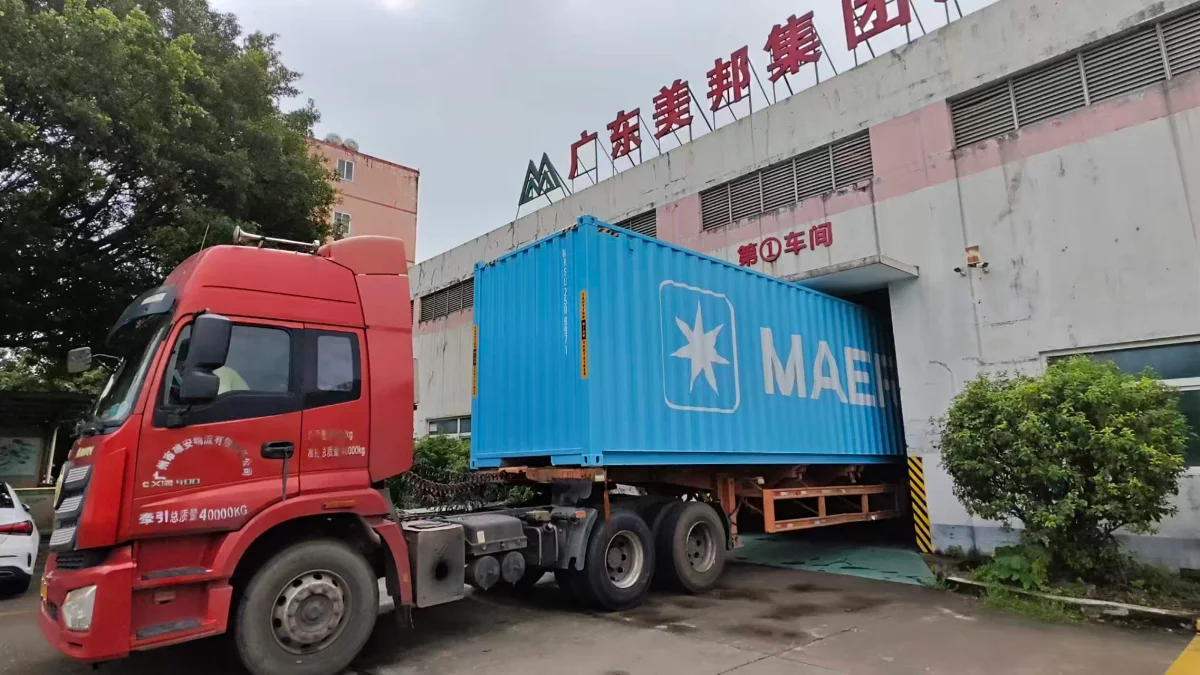
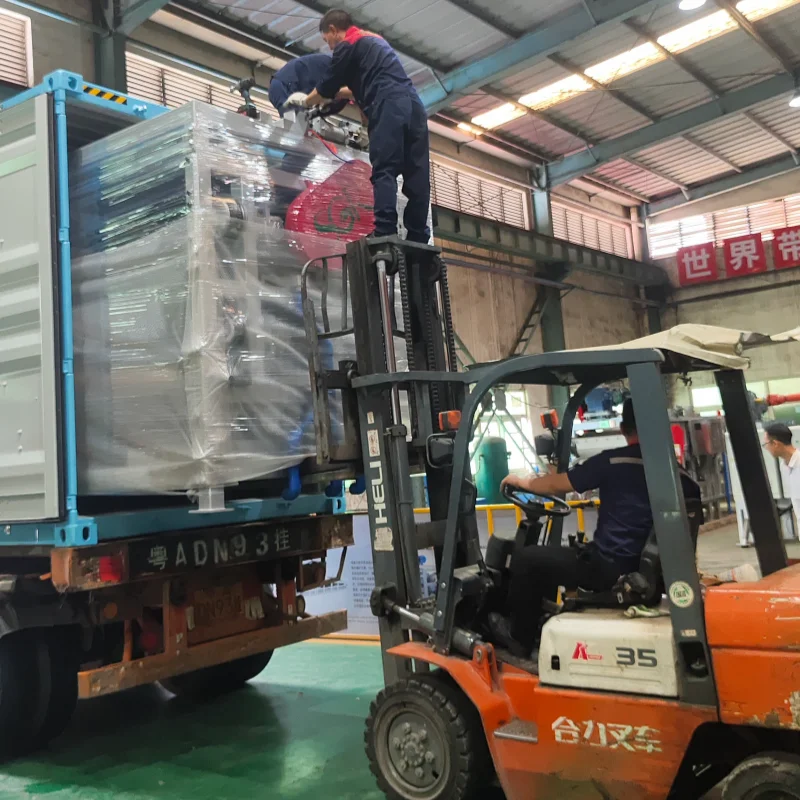
Mebon Group has recently completed the shipment of a 2m coco peat desalination and dewatering machine to Malaysia, where the equipment will be used to produce low-salt coco peat for high-quality growing media applications.
As demand for professional growing media continues to expand across horticulture, nurseries, greenhouse cultivation, and soilless agriculture, coco peat has become an increasingly important alternative to traditional peat-based materials. However, producing premium coco peat is not simply a matter of processing coconut husks into a usable growing medium. Salt management, moisture control, consistency, and processing efficiency all have a direct impact on the final product.
This latest shipment to Malaysia reflects Mebon’s continued focus on developing industrial-scale dewatering solutions specifically for the coco peat processing industry.
From Coconut Waste to Premium Growing Media
Malaysia has a well-established coconut processing industry and generates substantial quantities of coconut husk and related biomass residues. Through mechanical processing, these residues can be converted into coco peat and coir-based growing media with applications ranging from commercial nurseries to greenhouse horticulture.
Yet raw coco peat can contain soluble salts and other water-soluble compounds that may not be suitable for sensitive crops. For professional growing media producers, controlling electrical conductivity (EC) and producing a consistent low-salt product is therefore an important part of the processing process.
Desalination typically involves washing coco peat with water to remove soluble salts. After washing, however, the material retains a significant amount of moisture. If this wet material is sent directly to the next processing stage, producers may face higher transportation costs, longer drying times, larger storage requirements, and lower overall production efficiency.
This is where industrial dewatering becomes particularly important.
The combination of coco peat desalination and mechanical dewatering allows producers to address two interconnected challenges within the same processing system: reducing soluble salts while efficiently removing excess water.
Why Mechanical Dewatering Matters After Desalination
Water is essential during coco peat desalination, but excessive residual moisture becomes a processing challenge afterward.
Traditional natural drainage or long-term air drying can require considerable space and time. For large-scale coco peat processors, relying entirely on natural drying also makes production more dependent on weather conditions.
A high-capacity belt filter press provides a different approach.
After the washing and desalination stage, the conditioned coco peat can be fed into a continuous mechanical dewatering process. The machine progressively removes free water through gravity drainage, mechanical squeezing, and pressure dewatering.
Compared with simply allowing wet coco peat to drain naturally, mechanical dewatering can significantly accelerate water removal and provide much more consistent processing conditions.
For industrial producers, this means the dewatering system is not merely an auxiliary machine. It becomes an important part of the overall coco peat production line.
A 2m Belt Filter Press Designed for Industrial Coco Peat Processing
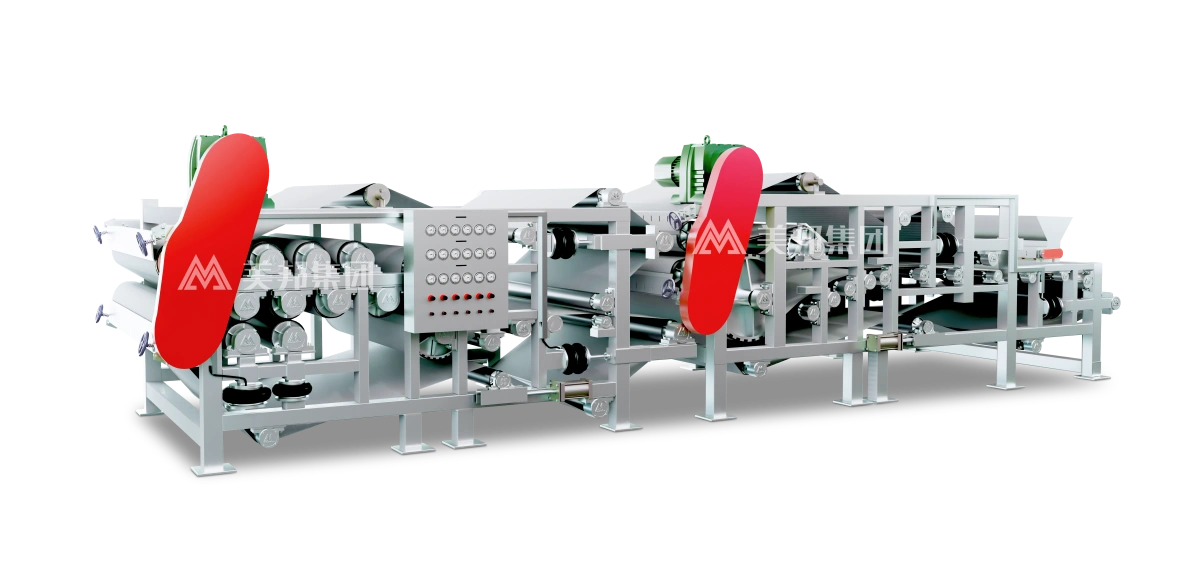
The machine shipped to Malaysia features a 2m-wide filter belt, providing a substantial filtration area for continuous coco peat dewatering.
Coco peat presents different challenges from conventional wastewater sludge. Its structure is highly fibrous, lightweight, and capable of retaining considerable amounts of water. Equipment designed for general sludge dewatering may not always deliver the desired performance when handling high-fiber agricultural materials.
Mebon has therefore developed belt filter press technologies with the characteristics of fibrous biomass materials in mind.
During operation, the wet coco peat passes through successive dewatering zones. Gravity drainage first removes readily available free water. The material is then gradually compressed as it moves through the pressure zones of the machine. This continuous process reduces moisture while maintaining stable material handling.
The 2m machine provides a balance between processing capacity, footprint, and continuous operation, making it particularly suitable for commercial coco peat processing facilities that need substantially higher throughput than small-scale batch equipment can provide.
More Than a Dewatering Machine
For premium coco peat producers, the objective is not simply to remove water.
The real objective is to establish a stable and controllable processing system capable of producing consistent growing media.
Several factors influence the quality of finished coco peat, including raw material characteristics, washing conditions, salt concentration, particle size, moisture content, buffering requirements, and subsequent drying or compression processes.
A professional dewatering system helps producers control one of the most important variables: moisture.
Stable moisture control can make subsequent processes easier to manage. It can also reduce unnecessary water movement through the factory, improve material handling, and reduce the amount of energy required if thermal or controlled drying is used later in the process.
For this reason, Mebon approaches coco peat dewatering as part of a complete processing solution rather than treating the filter press as an isolated piece of equipment.
Supporting Low-Salt Coco Peat Production
The Malaysian project is specifically intended for low-salt coco peat production.
This application highlights an important trend in the growing media industry. As coco peat moves from relatively simple agricultural waste utilization toward a standardized commercial growing medium, processors increasingly need to control product specifications rather than simply maximize output.
For growers, consistency matters.
A professional growing media manufacturer may need to supply coco peat with controlled EC levels, predictable moisture content, stable physical properties, and consistent particle characteristics. These requirements become even more important when the product is exported to international horticultural markets.
Desalination is therefore not simply a washing operation. It is part of the process of upgrading raw coconut biomass into a more standardized and higher-value growing medium.
Mechanical dewatering contributes to this process by efficiently separating water from the treated material after washing.
Designed for High-Volume Coco Peat Production
One of the biggest differences between small-scale coco peat processing and industrial production is throughput.
A small workshop may be able to rely on manual handling, natural drainage, and open-air drying. These approaches become increasingly difficult when production volumes reach hundreds or thousands of tonnes per month.
At this scale, production efficiency depends on continuous material flow.
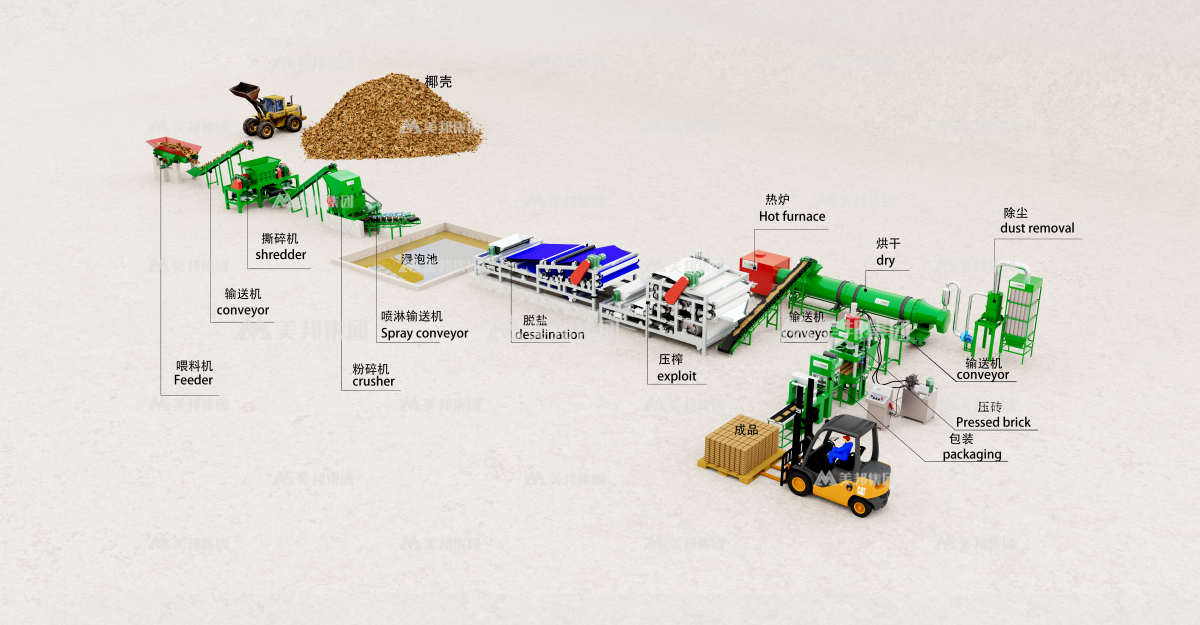
Raw coco husk must be processed continuously. Coco peat must be washed and desalinated efficiently. Water must be separated from the material without creating bottlenecks. The dewatered material must then move smoothly to drying, screening, buffering, compression, or packaging.
This is why high-capacity coco peat dewatering equipment is becoming increasingly important for professional processors.
A 2m belt filter press can operate continuously and integrate with upstream and downstream equipment, providing a more industrialized solution than conventional batch-based dewatering methods.
Building a Professional Coco Peat Processing System
Mebon Group’s approach goes beyond supplying individual machines.
Different coco peat producers have different raw materials, production capacities, moisture requirements, washing processes, and final product specifications. As a result, the appropriate dewatering configuration should be determined according to actual operating conditions.
Factors such as feed concentration, material composition, washing method, required throughput, target moisture content, and downstream processing should all be considered before selecting equipment.
This engineering-oriented approach allows the dewatering system to become part of a broader production line rather than functioning as a standalone machine.
For large coco peat producers, this distinction is important. The value of a dewatering machine is ultimately determined not only by its nominal capacity, but also by how effectively it integrates with the entire production process.
From Agricultural Residues to High-Value Growing Media
The development of the coco peat industry represents a broader transformation in agricultural biomass utilization.
Coconut husks were once primarily regarded as agricultural residues. Today, advanced processing technologies can convert these residues into valuable growing media used in modern horticulture.
However, creating high-value products requires more than raw material availability. It requires process control, equipment reliability, and an understanding of the physical characteristics of the material.
This is particularly true for dewatering.
Coco peat contains abundant fine particles and fibrous components, making water separation more challenging than with many conventional industrial materials. Equipment therefore needs to be designed around the characteristics of the material rather than simply applying a standard sludge dewatering concept.
Mebon’s experience in high-fiber material dewatering has become an important part of its approach to the coco peat industry.
Mebon: A Specialized Partner for Coco Peat Dewatering
The shipment of this 2m coco peat desalination and dewatering machine to Malaysia represents another step in Mebon Group’s development of specialized dewatering solutions for the global growing media industry.
Rather than positioning itself as a general-purpose filter press manufacturer, Mebon continues to build its expertise around challenging industrial materials, including coco peat, coconut coir, cassava pulp, agricultural residues, biomass, and other high-moisture, high-fiber materials.
For coco peat producers, the right dewatering technology can contribute to higher processing efficiency, more stable moisture control, reduced material handling costs, and a more reliable production workflow.
As the global growing media industry continues to move toward higher standards and more consistent product specifications, industrial dewatering will play an increasingly important role in transforming coconut biomass into premium growing media.
With high-capacity belt filter press technology, application-specific engineering, and experience in high-fiber material dewatering, Mebon Group aims to provide more than equipment. The goal is to become a long-term dewatering technology partner for producers seeking to build efficient, reliable, and scalable coco peat processing operations.
The latest 2m machine shipped to Malaysia is another example of this commitment—helping a new generation of coco peat processors move from conventional agricultural waste handling toward professional, high-value growing media production.