Sludge Dewatering Solutions
Project Overview
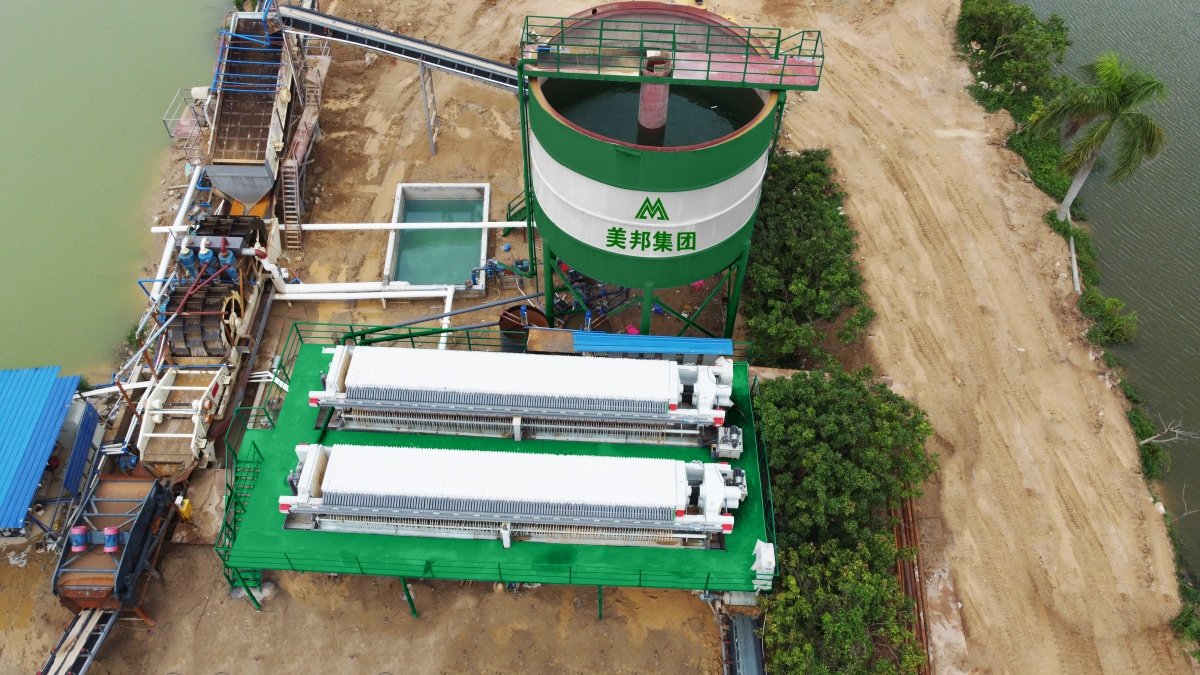
The Dongguan Songshan Lake dredging project aimed to remediate sediment accumulation and improve water quality in the Songshan Lake water system, aligning with broader regional water environment improvement efforts and ecological restoration principles. As part of the integrated dredging process, an efficient solid-liquid separation solution was implemented to handle dredged sludge and support environmental targets.
Project Background
In water body remediation efforts, dredging removes accumulated sediments that degrade water quality and disrupt ecosystem health. The typical dredged material contains high moisture content and organic/inorganic solids, which presents challenges for transportation, disposal, and reuse. An effective dewatering strategy is crucial for minimizing waste volume, reducing disposal costs, and enabling potential resource recovery.
Solution Overview
Our solid-liquid separation solution for the Songshan Lake dredging project was designed to:
- Efficiently separate water from dredged sludge — reducing moisture content to produce stable, transportable solid residues.
- Minimize environmental impact — prevent secondary pollution by treating water on-site and improving overall project sustainability.
- Integrate with dredging and pumping systems — ensuring seamless material handling from the lakebed to the separation equipment.
Key Components and Workflow
- Dredging & Slurry Collection
- Sediment is excavated using dredgers and mixed with water to form a slurry with controlled solids concentration.
- The slurry is pumped via enclosed piping to the on-shore preprocessing area.
- Pre-Treatment & Screening
- Coarse screening removes large debris and grit to protect downstream equipment and improve dewatering performance.
- Polymer conditioning may be applied to enhance flocculation, aiding in rapid water release.
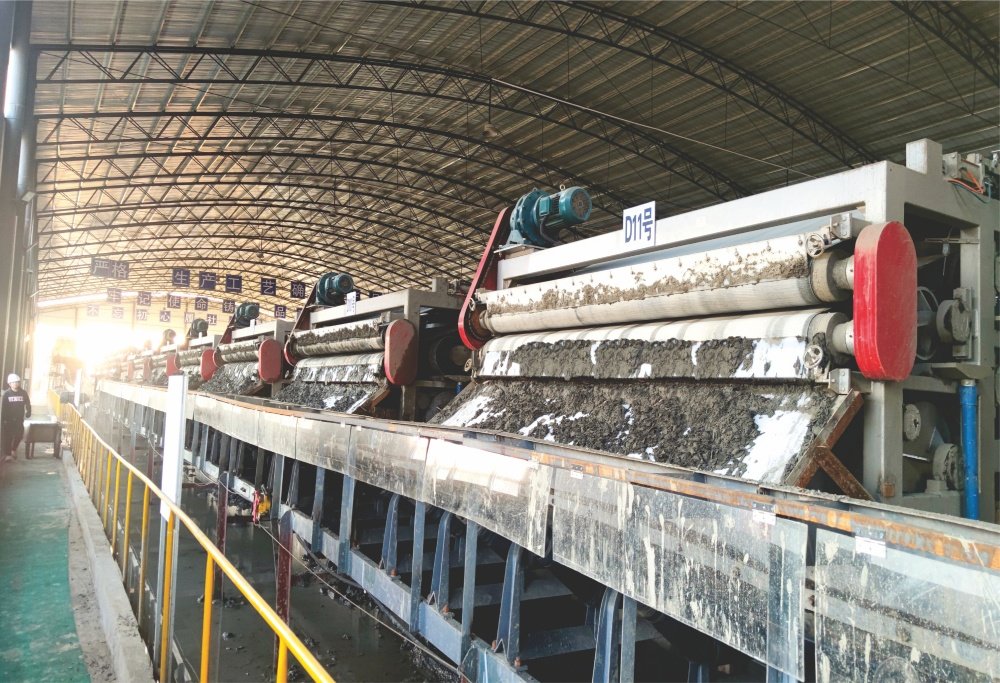
- Dewatering System
- High-pressure filter presses are deployed to press out water from the conditioned slurry.
- The system separates solids from free water, significantly lowering residual moisture in the filter cake.
- Water Management
- The discharged filtrate is collected and clarified before being either returned to the water body under compliance or treated further according to discharge standards.
- Solid Handling & Final Disposal
- Dewatered solids are collected and transported with reduced volume, lowering logistics and landfill costs.
- Depending on local regulations and material characteristics, further reuse options (e.g., soil amendment or construction fill) may be explored.
Benefits & Outcomes
- Improved Dewatering Efficiency — reducing sludge moisture content and achieving stable solids for handling.
- Reduced Disposal Costs — smaller transport volume and less landfill space required.
- Environmental Compliance — treated water meets applicable discharge or reuse standards.
- Seamless Integration — the dewatering solution works in coordination with dredging and pumping operations, ensuring smooth project execution.
- Enhanced Water Quality — contributes to the overall lake restoration goals by removing contaminants and excess sediments.