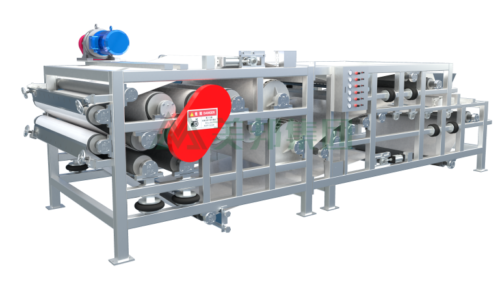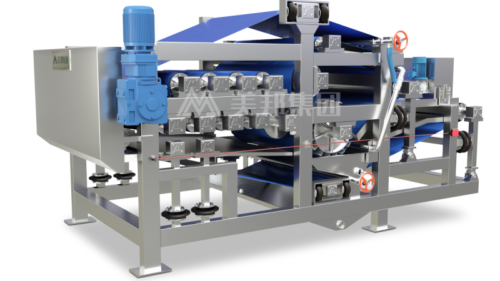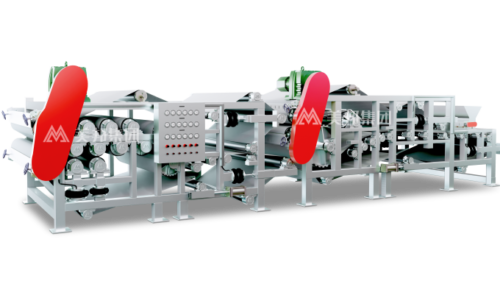
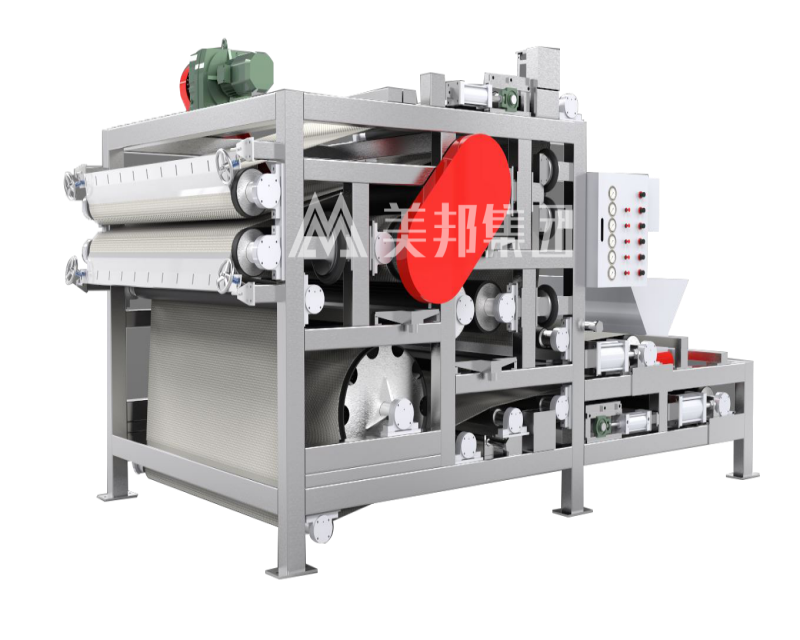
Double Roller Press
The dual-roller press delivers uniform continuous pressure for efficient moisture reduction, features a robust low-maintenance design for stable long-term operation, and easily integrates into automated lines while handling a wide range of high-moisture materials.
Technical Parameters
High-Pressure Twin-Roller Press
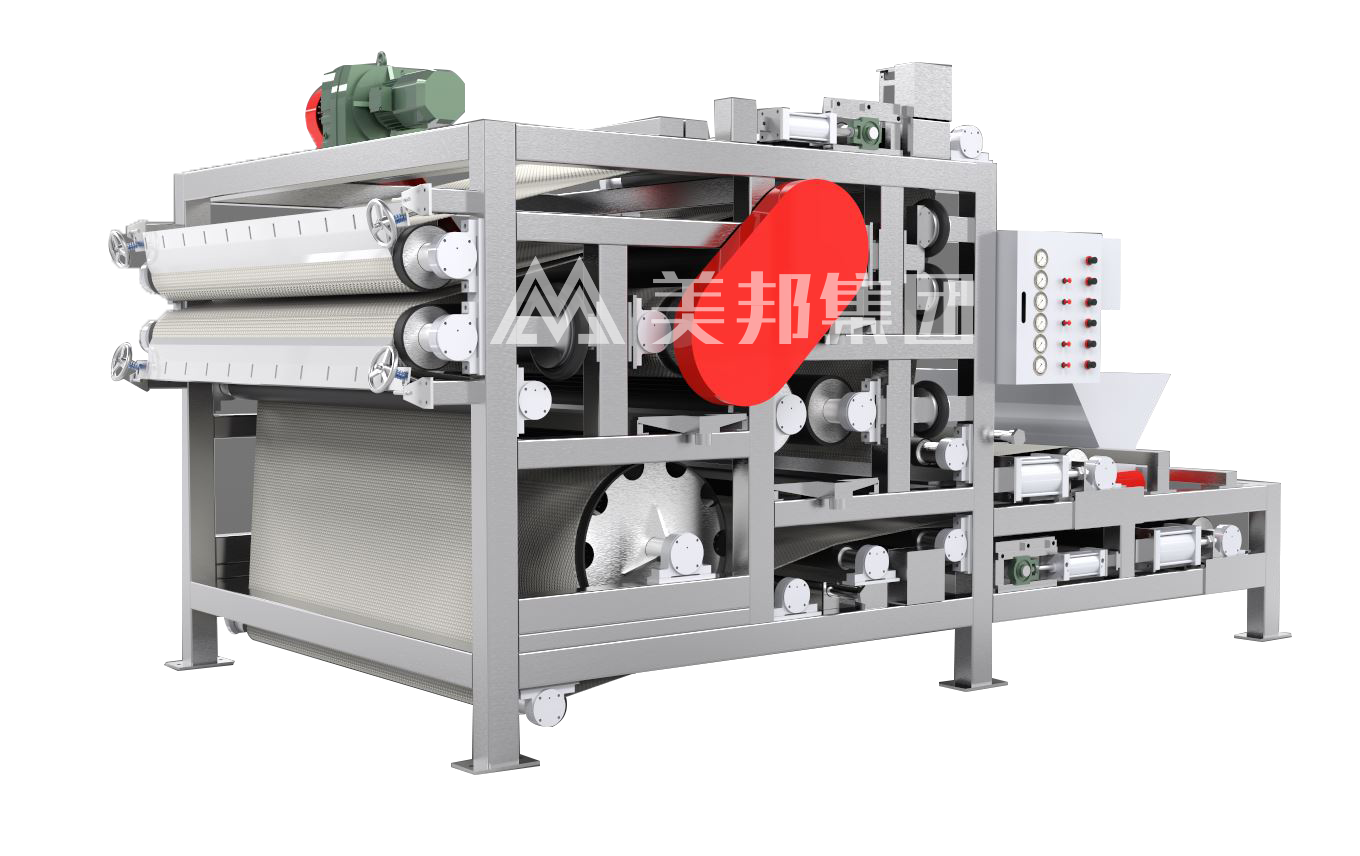
Designed with an ultra heavy-duty deep pressing structure, featuring industry-leading technology. It effectively solves the dewatering challenges of plant tank residues and fibrous materials, significantly reducing moisture content to the maximum extent. Especially suitable for long-fiber residue dewatering.
| Product Advantages | ||
| 24-hour operation | Large processing capacity with low power consumption |
Easy operation and maintenance |
| Optimized for processing long-fiber residues |
Ultra-heavy-duty deep pressing structure |
Reduce material moisture content |
| Technical parameter | ||||
| Model | DYQ1000P3 | DYQ1500P3 | DYQ2000P3 | |
| Power(KW) | Host | 5.5 | 7.5 | 11 |
| Sets | 15 | 17 | 21 | |
| Filter width(MM) | 1000 | 1500 | 2000 | |
| mud throughput(m/h) | 2-6 | 5-12 | 9-15 | |
| Size | Length (MM) | 4500 | 4500 | 4500 |
| Width (MM) | 1850 | 2300 | 2800 | |
| Height (MM) | 2300 | 2400 | 2450 | |
| Machine weight (t) | 6 | 7.5 | 9 | |
| Moisture content(%) | 45-65 | |||
Widely applied in the dewatering of cassava residue, tea residue, brewery spent grain, traditional Chinese medicine residue, wood pulp fiber, sugarcane bagasse, coconut shell fiber, coconut meat, and similar materials.
Double Roller Press
The Double Roller Press is a high-performance mechanical dewatering and pressing machine designed for efficient solid-liquid separation of high-moisture materials. Built with robust construction and precision components, this equipment delivers stable operation and reliable performance for continuous industrial use.
The press features dual rollers working in tandem to apply consistent compression across the material, effectively reducing moisture content and volume. Its optimized roller configuration ensures even pressure distribution, resulting in improved dewatering efficiency and enhanced output quality. With a user-friendly control system and low maintenance requirements, the Double Roller Press offers smooth, uninterrupted processing and reduced operating costs.
This machine is widely used in biomass processing, pulp and fiber dewatering, agricultural waste treatment, food residue pressing, and industrial by-product handling. It is especially suitable for applications where enhanced moisture removal and material compaction are critical to downstream processes or resource recovery.
Engineered for durability and long service life, the Double Roller Press is an ideal solution for manufacturers and processing facilities that require dependable performance, high throughput, and cost-effective operation.
Working Principle
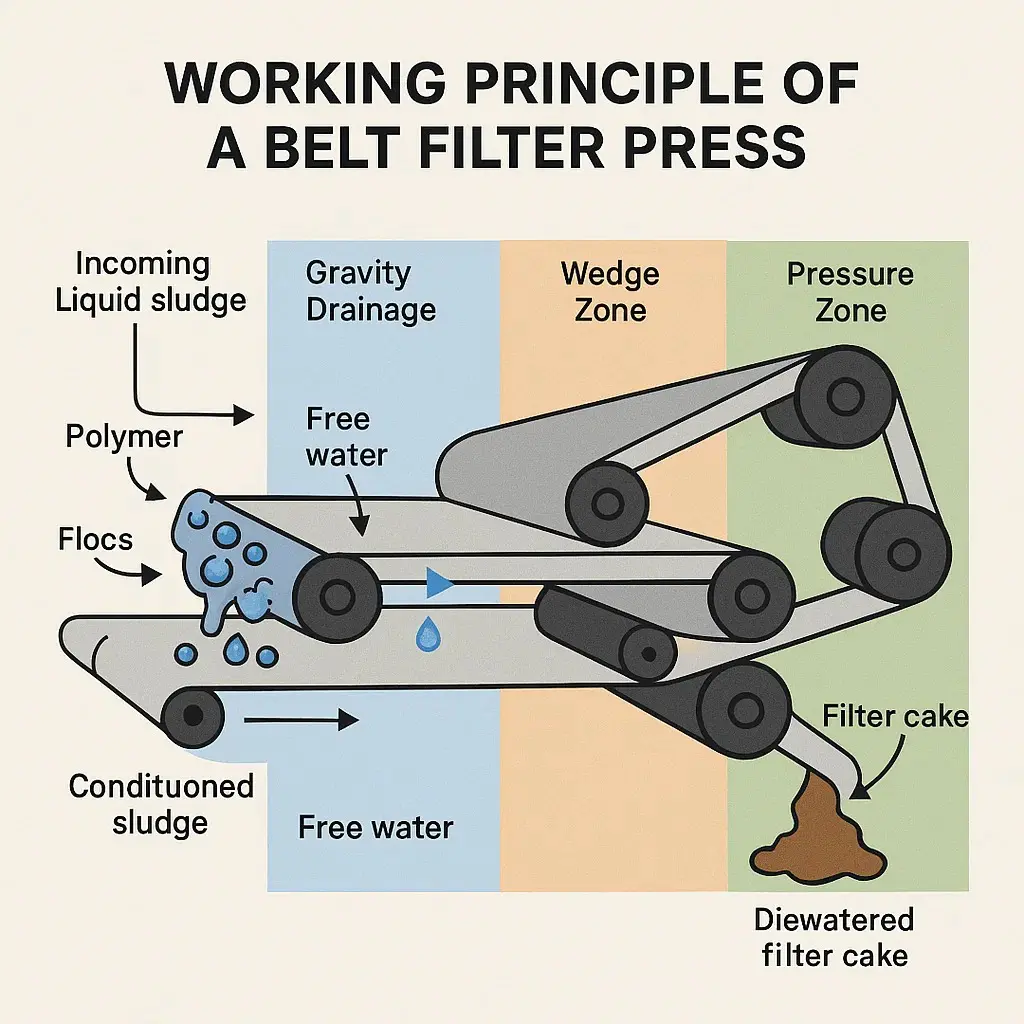
The belt filter press achieves continuous and efficient solid-liquid separation through a combination of gravity dewatering and mechanical pressing. After entering the system, sludge or slurry passes through several dewatering stages, where moisture content is gradually reduced and a solid filter cake is finally discharged.
First, the material is evenly distributed onto the lower filter belt and enters the gravity dewatering zone, where free water drains through the filter belt under gravity. The material then moves into the wedge (pre-press) zone, where the upper and lower filter belts gradually converge to apply mild compression, further removing water and stabilizing the material.
Next, the material, sandwiched between the two filter belts, enters the pressing zone. As the belts pass over a series of pressure rollers, increasing mechanical pressure and belt tension squeeze out additional water. The solids are progressively compacted, forming a low-moisture filter cake.
Finally, the dewatered filter cake is continuously discharged from the filter belt, while the belts are thoroughly cleaned by a high-pressure washing system and returned to the process. The entire operation runs continuously, offering high dewatering efficiency, low energy consumption, and stable performance for large-capacity sludge and material dewatering applications.